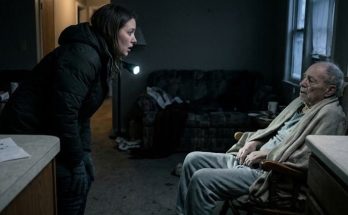
I used to think that if I followed every rule, nobody could accuse me of doing anything wrong.
That belief lasted until the night my father decided the front door mattered more than my safety.
My name is Kayla Mercer.
I was twenty-four, working as a registered nurse at a regional hospital in Minnesota, and still living in the house where I had grown up.
I paid rent.
I paid toward the car I drove.
I bought my own groceries when I could, kept my room clean, and tried not to give my father a reason to complain.
For eighteen months, I had lived like that.
I told myself it was temporary.
I wanted to pay down my nursing school loans and save enough money to rent a place of my own.
June was supposed to be my deadline.
By then, I thought I would have enough put aside to leave without asking anybody for help.
I had a spreadsheet for my expenses and a separate savings account.
I even calculated how much I could save if I stopped buying coffee on the way to work.
Nothing dramatic.
Just a plan.
My father, however, had his own plan for how an adult daughter should behave while living under his roof.
Ten o'clock was the curfew.
It did not matter that I worked in a hospital or that my shifts did not always end when scheduled.
I was expected to be home on time.
If something changed, I was expected to explain myself.
My location was shared through my phone, and I had to ask before inviting anyone over.
I was twenty-four years old, but sometimes I felt as if I were still waiting for permission to go to a friend's house after school.
My younger brother, Tyler, lived by different rules.
He had a red pickup truck, a habit of coming and going whenever he pleased, and no curfew that I could see.
When I asked Dad about the difference once, he told me that Tyler was a different kind of person.
That was all the explanation I received.
I let it go.
Or I pretended to.
My mother rarely argued with Dad in front of us.
She could make a room feel quieter simply by lowering her eyes and finding something to straighten.
A napkin.
A stack of mail.
The corner of a dish towel.
When Dad was upset, Mom became very interested in keeping things tidy.
I had learned to do the same.
That night, a blizzard was moving through central Minnesota.
The hospital had been busy since the afternoon, and the weather had made everything harder.
Roads were filling with snow.
Cars were sliding into ditches.
People who normally arrived for their shifts were calling to say they could not get through.
Two nurses assigned to the night shift never made it in.
My charge nurse asked whether I could stay longer.
There were patients who needed help, and there was nobody available to take over all the work.
I looked at the clock.
Then I thought about my father's curfew.
I should have been thinking about the roads and the people who needed care.
Instead, I was already worrying about how I would explain being late.
That was how thoroughly I had trained myself to think.
At 8:15 p.m., I sent a message to my parents.
I explained that the storm had left us short-staffed and that I had agreed to stay until we could get through the worst of it.
Mom replied with a heart.
It was small and red.
I remember that because I looked at it twice, hoping it meant she understood.
Then my father's message appeared.
“Read.”
One word.
No question about the patients.
No concern about the weather.
Just an order to acknowledge that I had received his message.
I typed that I understood.
I did not ask for an exception.
I did not remind him that I was a nurse and that people could not simply be left waiting because my curfew was approaching.
I had spent years learning that explanations often made him angrier.
So I went back to work.
The evening dragged on.
I helped patients get settled, checked on people who were frightened by the storm, and answered questions from families who wanted to know when their loved ones could go home.
Outside the hospital windows, snow kept falling.
Every time I passed the entrance, I saw another person coming inside with white flakes on their shoulders.
I wondered whether the roads would be passable by the time I left.
I also wondered whether Dad would have the chain on the door.
I hated that I was thinking about that.
I hated even more that I had a reason to.
By the time I finished, I was tired enough that my feet hurt inside my shoes.
My scrubs smelled faintly of disinfectant, and my hands were dry from washing them so often.
I wanted a shower.
I wanted my bed.
Mostly, I wanted to walk through my front door without having to defend the fact that I had been doing my job.
I left the hospital and drove slowly.
The snow made the road difficult to read, and the wind pushed loose powder across the headlights.
I kept both hands on the steering wheel.
There were stretches when I could barely make out the edge of the pavement.
I thought about pulling over, but I was closer to home than to anywhere else I could safely go.
Then I saw the hazard lights.
They were blinking from a deep bank of snow beside County Road 75.
At first, I thought the vehicle was empty.
Then a man moved beside it.
He was old, and he was struggling to climb out of the ditch.
I stopped.
I remember looking at the clock on the dashboard.
I remember thinking about the time.
And I remember being ashamed of that thought before I had even opened my door.
The man tried to put weight on one leg, lost his balance, and fell against the snowbank.
I got out and hurried toward him.
His forehead was bleeding.
One wrist was held close to his chest, and his face had the frightened, exhausted look of someone who had already tried everything he could think of.
He told me his name was Walt.
I called 911 and explained where we were.
Then I helped him toward my car, moving slowly because he was hurt and the ground was slippery.
He was lighter than I expected.
Once he was inside, I turned the heat up and took off my coat.
He tried to tell me he would be fine without it.
I wrapped it around him anyway.
His clothes were wet, and he was shivering hard enough that he struggled to finish a sentence.
I stayed beside him while we waited for the ambulance.
He told me he had spent thirty-one years operating county snowplows.
For a little while, he talked about roads he had cleared and winters that had seemed endless at the time.
Then he looked through the windshield at the falling snow.
“I used to keep this stretch open,” he said.
There was a tired sort of humor in his voice.
I smiled because I thought he needed somebody to smile back.
When the ambulance arrived, the crew checked his injuries and helped him out of my car.
His wrist was broken.
His forehead needed attention.
They got him onto the stretcher and began preparing to take him to the hospital.
My coat was still wrapped around him.
I did not ask for it back.
He had been cold, and I could manage without it for a while.
I watched the ambulance pull away.
Then I stood beside my car, rubbing my hands together while snow collected on my sleeves.
For a moment, I felt relieved that Walt was no longer alone in that ditch.
Then I looked at the time.
I was late.
Again.
I got into the Corolla and drove the rest of the way home.
I had no idea that stopping to help a stranger would become the part of the night my father would work hardest to erase.
Click here to continue reading: PART 2: The Security Chain Was the Only Thing Between Me and Home, and Someone Inside Had Decided It Belonged There
The Night I Learned That Being a Good Daughter Could Leave Me Freezing Outside My Own Home
Part 1 of 20