The days after their return were quieter than I expected.
Not peaceful.
Just quiet.
Brady and Elaine were in the house, but the old routine had disappeared.
Nobody could pretend the Thanksgiving note had never existed.
Nobody could pretend Victor had been properly cared for when I'd found him.
And nobody could make the three-million-dollar trust disappear from the conversation simply because it was uncomfortable.
Victor had made his position clear.
He wanted answers about his care.
He wanted his assets protected.
And he wanted to make his own decisions about his future.
I stayed beside him while those matters moved forward.
I didn't try to control what he decided.
The attorney reviewed the trust with him and helped him understand his options.
I supported him in seeking that advice.
The trust remained Victor's property, and any decisions about it needed to follow its terms and reflect his wishes.
I couldn't promise a particular outcome.
I didn't need to.
What mattered was that he was no longer being expected to accept other people's decisions without being heard.
The medication question also remained important.
The bottle I'd preserved needed professional examination.
Until its contents and the circumstances surrounding it were properly assessed, I couldn't claim that Elaine had taken or sold Victor's medication.
I had suspected something was wrong.
I had acted to preserve the evidence.
That was the responsible thing to do.
The truth would have to be established through the examination and any further investigation that proved necessary.
I didn't need to invent a result.
I needed to let the evidence answer the question.
Brady was different.
He had already admitted that he thought I would handle Victor's care because I was coming home.
He had acknowledged that he and Elaine had left his father expecting things to be fine until Monday.
Those words were part of the conversation I had wanted to have.
They didn't explain every decision made before the cruise.
But they showed that Brady had relied on my arrival instead of making sure his father had adequate care.
He could call it a mistake.
He could say he hadn't expected things to become so serious.
He could regret what had happened.
None of that changed the fact that Victor had been left alone.
Brady eventually apologized to his father.
It wasn't a grand speech.
He stood beside the rocking chair and spoke quietly.
“I'm sorry I left you like that.”
Victor looked at him.
For a long moment, he didn't answer.
Then he said, “You need to understand why it was wrong.”
Brady nodded.
“I do.”
Victor studied him.
“I hope you do.”
That was all he said.
I didn't push Victor to forgive his son.
I didn't tell him he should move on for the sake of the family.
He had the right to decide what their relationship would look like from then on.
An apology could matter.
It could be the beginning of something better.
But it couldn't erase what had happened.
Elaine also had to face the questions about her role in Victor's care.
She had been responsible for collecting his prescriptions, according to Victor.
She had been part of the decision to take the cruise.
Those facts required honest answers.
I wasn't going to decide in advance what the medication examination would establish.
I wasn't going to declare her guilty of something I couldn't prove.
But I wasn't going to pretend the concerns were unimportant, either.
The trust was protected through the legal process.
Victor was able to discuss his wishes with the attorney.
And the circumstances surrounding his medication remained a matter for proper examination rather than family speculation.
Those steps weren't dramatic.
They were necessary.
I had once imagined that justice would look like a confrontation in which everyone finally admitted what they'd done.
Real life was less simple.
It was paperwork.
Careful records.
Difficult conversations.
And the patience to let facts become clear.
I learned that protecting someone didn't always mean fighting on their behalf.
Sometimes it meant making sure they had the information and support needed to speak for themselves.
Victor had spent years being the man who took care of other people.
His illness had changed what he could do physically.
It hadn't changed who he was.
He was still a man with preferences, memories, pride, and the right to decide what happened to his money and his life.
I wanted him to have as much control as possible over those decisions.
One afternoon, I sat beside him in the living room.
The old rocking chair was still there.
The blanket across his legs was clean and warm.
The heating system was running.
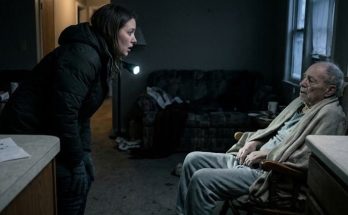
I remembered the first time I'd seen him sitting in that chair, barely conscious and unable to reach what he needed.
I remembered how cold the floor had been.
I remembered the note on the kitchen island.
I would never forget those things.
But I didn't want that moment to become the only thing I remembered about Victor.
He was more than what had happened to him.
He was more than the trust.
He was more than the questions surrounding his medication.
He was a person who deserved care even when there was no money to protect and no evidence to preserve.
That was the lesson I carried with me.
Victor looked over at me.
“You're thinking again.”
“I do that.”
“Too much.”
I smiled.
“Probably.”
He looked toward the window.
Then he turned back to me.
“Thank you for coming home.”
I felt my throat tighten.
“I wish I'd found you sooner.”
“You came when you could.”
He reached for my hand.
“You did what mattered when you got here.”
I held his hand for a moment.
I had spent days wondering whether I could have done more.
Whether I should have noticed something earlier.
Whether my trust in Brady had made me overlook signs I should have questioned.
But Victor was right about one thing.
I hadn't been in the house when the decision was made.
I couldn't change that.
I could only choose what I did after I found him.
I had arranged for care.
I had preserved the evidence.
I had contacted an attorney.
I had helped him make sure his wishes were heard.
And I had refused to let the situation be dismissed as an inconvenience.
That was what I could do.
As for my marriage, I couldn't repair it by pretending the trust had never been broken.
Brady's choices had changed how I saw him.
I didn't know exactly what our future would look like, and I wasn't going to invent a simple answer to a difficult question.
Trust had to be earned through actions.
An apology was not the same as a change.
I would have to decide what I could live with and what I could no longer accept.
That decision belonged to me, just as Victor's financial decisions belonged to him.
Elaine's future choices were hers to make, too.
What mattered was that nobody could reasonably expect the old arrangement to continue without confronting what had happened.
The note had once seemed like a careless message from a husband who assumed I would take care of everything.
Now it reminded me of the moment I stopped making excuses for other people's choices.
I had arrived home expecting Thanksgiving dinner.
Instead, I found a man who needed help and a family that had failed him.
Victor's trust had surprised me.
The medication bottle had raised serious concerns.
The conversation after the cruise had forced Brady and Elaine to face questions they could no longer avoid.
But the most important thing hadn't been the money or the confrontation.
It was the simple fact that Victor had been heard.
He had been given care.
He had been allowed to make decisions about his own future.
And he no longer had to sit alone in a freezing room, waiting for someone to decide whether his needs mattered.
I had come home thinking I was returning to a familiar life.
I left that Thanksgiving understanding that family wasn't proved by a name, a marriage certificate, or a promise written on a piece of paper.
It was proved by what people did when someone needed them.
Victor had needed us.
I had found him.
And when he asked me to help him protect his future, I had said yes.
Not because he had three million dollars.
Not because I wanted revenge.
Because he was a human being who deserved to be treated with dignity.
That was the promise I could keep.
And it was the one that mattered most.
The End
Read more original stories on Feel Every Story.
I Thought I Was Coming Home for Thanksgiving, Until the Cold Inside That House Told Me Something Was Terribly Wrong
Part 20 of 20