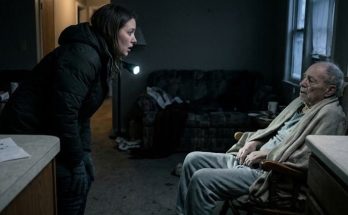
We gathered around the kitchen island.
Dad remained standing.
Mom sat in her usual chair, her hands folded near her coffee cup.
Tyler pulled out a chair but did not sit all the way back.
I stayed near the doorway.
Dad said three parents from the school where he worked had contacted him.
They had seen the story and wanted to know what kind of example he was setting for students.
He had spent twenty-six years building a reputation as a dependable educator.
People knew him as a man who believed in discipline and personal responsibility.
He was proud of that image.
He mentioned it often.
At school events, he spoke about doing the right thing even when it was difficult.
At home, he expected us to follow the same principle whenever he defined what the right thing was.
Now the same words were being used to question him.
He said the principal had asked to speak with him about Monday's character assembly.
Dad was supposed to lead it.
The principal wanted to know whether it was appropriate for him to stand before students and talk about honesty while the school was receiving questions about his own conduct.
Dad said the questions were unfair.
He said people had taken a private disagreement and turned it into public entertainment.
I listened without interrupting.
He did not mention the chain.
He did not mention the note.
He did not mention the temperature.
Instead, he talked about his job, his years of service, and the damage that could come from a story being told without context.
I understood that his reputation mattered to him.
I had known that for as long as I could remember.
What I had not understood was how much he expected us to sacrifice to keep it intact.
He turned toward me.
“You have until Friday.”
I waited.
He said I had two choices.
I could make a public statement correcting the story, or I could move out.
Then he reminded me that the Corolla would remain with him.
He said the vehicle was registered in his name, and he had never promised I could keep it if I chose to challenge him.
I felt the familiar pressure in my chest.
The car was how I got to work.
It was how I drove home after long shifts.
Without it, everything I had planned would become harder.
I had paid toward it every month.
I had treated those payments as part of my independence.
But the paperwork belonged to him.
Dad knew exactly where the pressure point was.
I asked what he expected me to say in the public statement.
He said I should explain that the weather had caused confusion and that the family had misunderstood one another.
I asked whether I should mention the chain.
He said I was being deliberately difficult.
I asked whether I should explain that I had knocked on the door.
He said I was refusing to see the bigger picture.
I looked at him.
“What is the bigger picture?”
He shook his head.
“You're making this impossible.”
I almost laughed.
Not because anything was funny.
Because I had spent the night outside trying to get into a house where the door had been deliberately secured, and now I was being told that I was the one making things impossible.
Mom stared at her cup.
Tyler looked down at the table.
I wanted one of them to say something.
I wanted somebody to tell Dad that his reputation could not be more important than the truth.
Nobody spoke.
Dad continued.
He said I had embarrassed the family and created a problem at his workplace.
He said I needed to take responsibility for the consequences of my decision.
I asked which decision he meant.
He answered that I had chosen to speak to the reporter.
I reminded him that he had asked me to repeat a story I knew was false.
His face tightened.
He said the lock might have been difficult to open because of the storm.
I told him the key had turned.
The door had opened several inches.
The chain had stopped it.
He looked away briefly.
It was not much.
But I noticed.
For the first time, he did not immediately answer with another explanation.
Then he said that I had no right to make a judgment about what happened inside his house.
I thought about that sentence for a long time afterward.
He wanted me to accept his version of events, but he did not want me to question the decisions he had made.
He wanted me to take responsibility for the public consequences without being allowed to describe the private facts.
That was the arrangement he was offering.
I could protect his image, or I could lose the things I still depended on him for.
I looked at the clock above the refrigerator.
The second hand moved steadily.
I had spent the previous night watching the clock in my car, waiting for six in the morning.
Now I was watching another clock while my father told me that my home and transportation could be taken away.
I wondered how much of my life I had spent measuring time by his permission.
Dad told me he expected an answer before Friday.
I said I understood.
He seemed to take that as agreement.
Then he told me we were finished discussing it.
I went upstairs.
I closed my bedroom door and sat beside the folded army blanket.
The deadline was three days away.
I could retract what I had said.
I could tell people that I had misunderstood the situation.
I could make a public statement that would help Dad return to school without answering difficult questions.
If I did that, I might keep the car.
I might be able to stay in the house until June.
I could continue saving money and leave according to my original plan.
Those were practical reasons.
I repeated them to myself as if they were figures in my budget.
But every time I pictured the statement, I saw the index card.
I saw the three sentences in blue ink.
I saw Dad standing by the garage controls.
And I knew I would be lying.
I opened my laptop and checked my savings.
The balance was not as high as I wanted.
My student loan payment was due soon, and rent for a new place would cost more than I was paying at home.
I had planned for June, not Friday.
I closed the spreadsheet.
Then I opened it again.
Numbers were easier to face than my father.
They stayed where I put them.
They did not change the rules halfway through an argument.
I began making a list of what I would need if I had to leave sooner than planned.
My identification documents.
My nursing license information.
My work clothes.
My medications and toiletries.
The small things I used every day.
I stopped when I reached the car.
I did not know what I would do about transportation.
I could ask a coworker for rides temporarily.
I could look at public transportation options near the hospital.
I could work something out.
None of it would be easy.
But for the first time, I was making a plan based on what might happen rather than what I hoped Dad would allow.
A little later, Mom knocked on my door.
She stepped inside without waiting for an answer.
She looked at the list on my desk.
Then she looked at me.
She asked whether I really intended to move out over this.
I told her I had not decided.
She sat on the edge of the bed.
For a moment, she looked as if she wanted to say something important.
Then she asked whether I could not just give Dad what he wanted until things calmed down.
I asked her what she thought I should say.
She said I could explain that everyone had been tired and upset.
I asked whether that would be true.
She pressed her lips together.
I could see how much she wanted the conversation to end.
I could also see that she was afraid of what would happen if I refused.
I felt sorry for her.
I hated that I felt sorry for her while still wanting her to admit what she had allowed.
I told her I needed time to think.
She stood up and smoothed the blanket on my bed, although it was already flat.
Then she left.
After she closed the door, I returned to my list.
Friday was no longer an abstract deadline.
It was a decision I would have to make while standing inside the same house where I had grown up.
And I was beginning to understand that keeping the peace might cost me more than leaving.
Click here to continue reading: PART 7: I Started Counting What I Could Carry Out of My Childhood Bedroom, but the Question About Tyler Still Would Not Leave Me Alone
The Night I Learned That Being a Good Daughter Could Leave Me Freezing Outside My Own Home
Part 6 of 20