I did not sleep well that night.
Mom's words kept returning to me.
She had heard something.
She had known I was in the car.
She had been afraid of making Dad angrier.
I understood fear.
I had lived with it for years, although I had rarely called it that.
I had called it respect.
I had called it being considerate.
I had called it knowing when to leave an argument alone.
Sometimes those things were true.
Other times, they were names I gave to the feeling that came over me whenever Dad's voice changed.
The next morning, I found Mom in the kitchen before anyone else was awake.
She was making coffee.
I stood beside the counter and waited while the machine finished dripping.
She looked at me.
“I meant what I said last night.”
I nodded.
“I know.”
She asked whether I was going to move out.
I told her I had not decided.
She said she hoped I would not make a permanent choice because of one terrible night.
I looked at her.
“It wasn't just the night.”
She lowered her eyes.
I reminded her about the curfew, the location sharing, and the way I had to ask permission to have anyone visit.
I told her I had accepted those rules because I believed they were temporary.
I had paid rent and helped with the car because I thought I was building toward independence.
But I had never expected Dad to use those things to threaten me when I disagreed with him.
Mom listened.
She did not interrupt.
For a moment, I thought she might acknowledge what I was saying.
Instead, she asked whether I could try to understand how much pressure Dad was under.
His school was asking questions.
People were discussing the story.
He was worried about his reputation.
I looked at her and felt something inside me go quiet.
Even now, she was asking me to make room for his feelings before she had finished making room for mine.
I told her I understood he was under pressure.
Then I asked whether she understood what it had felt like to sit outside the house and watch him open the garage for Tyler.
She looked toward the hallway.
I knew she did not want to answer.
I did not ask again.
I took my coffee upstairs and got ready for work.
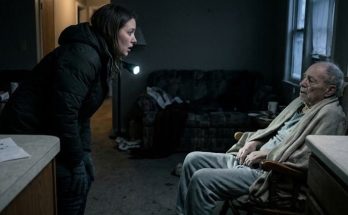
At the hospital, I received another message from Dana.
She said Walt had asked about me.
He wanted to thank me properly when he was feeling better.
I told her he did not owe me anything.
Dana replied that he knew that.
He simply wanted me to know he was grateful.
I smiled at the screen.
For a moment, I felt the same quiet relief I had felt when I first learned he was stable.
Then I put my phone away and returned to my shift.
I did not need Walt to prove I had done the right thing.
I had stopped because he was hurt.
I had called for help because he needed it.
The fact that my own family had treated me badly afterward did not change why I had stopped.
That afternoon, Dad sent me a message.
He wanted to know whether I had contacted the reporter about correcting the story.
I read it during a break.
Then I put the phone face down on the table.
I did not answer immediately.
I had spent too many years treating every message from Dad as something that required an instant response.
The delay felt strange.
It also felt like a small piece of my life returning to me.
When my shift ended, I checked my phone again.
There was another message from him.
He said I was running out of time.
I wrote that I understood the deadline.
Then I stopped.
I did not promise to make the statement.
I did not tell him I would obey.
I simply acknowledged what he had said.
On the drive home, I stopped at a grocery store to buy a few things for dinner.
I stood in front of the shelves longer than necessary, comparing prices and thinking about how much it would cost to feed myself if I moved out.
I put back a few items.
Not because I was desperate.
Because I was learning to plan for a different set of circumstances.
When I reached home, Dad was waiting at the kitchen table.
The index card was back on the island.
He had written something else on a sheet of paper.
I could not see the words from the doorway.
He told me to sit down.
I set my grocery bag on the counter.
He said the story was causing more trouble than he had expected.
I asked whether the principal had made a decision about the assembly.
He said that was not the point.
He wanted me to make the public correction.
I asked him what part of my interview he believed was inaccurate.
He stared at me.
“You know what you're doing.”
I shook my head.
“No. I'm asking you.”
He pushed the paper toward me.
It contained a short statement describing the night as a misunderstanding caused by the storm.
It said the door had been difficult to open and that I had not intended to wake anyone.
I read it slowly.
Then I put the paper down.
I told him I could not sign it.
He leaned back in his chair.
He said I was choosing strangers over my own family.
I thought about Dana bringing the blanket.
I thought about my coworker asking whether I needed help.
I thought about Mom admitting she had heard me outside.
I looked at Dad.
“I didn't ask strangers to let me into my house.”
His face changed.
He said I was being disrespectful.
I told him I was describing what had happened.
He picked up the paper and folded it once.
Then he told me I would regret turning this into a fight.
I did not answer.
I went upstairs and finished packing the small bag I had started earlier.
I included enough clothes for a few days and the toiletries I used every morning.
I left it in the closet.
I was not ready to leave without knowing where I would go.
But I wanted to be able to move quickly if the decision was made for me.
That night, I lay awake thinking about the difference between an apology and an admission.
Mom had apologized for being afraid.
She had not yet said that leaving me outside was wrong.
Dad had not apologized at all.
He had only offered a statement that would make the problem disappear.
I could accept that people were frightened.
I could understand that they might not know what to do.
But understanding was not the same as pretending nothing had happened.
The following morning, I made a decision.
I would not sign Dad's statement.
If that meant leaving before June, I would work out how to do it.
I was scared.
I was not certain how everything would turn out.
But I knew I could not build an independent life by telling people that the truth was something else.
Click here to continue reading: PART 11: I Chose Not to Sign the Statement, and My Father Began Treating My Independence Like a Personal Betrayal
The Night I Learned That Being a Good Daughter Could Leave Me Freezing Outside My Own Home
Part 10 of 20