I returned to court with the blue folder tucked against my side.
The corners had softened from being opened so many times.
Inside were the withdrawal slips, the bank statements, my notes, and the photograph of my grandmother wearing her emerald ring.
I had stopped expecting the papers to make anyone believe me.
They were there to show what had happened, not to make people like me.
My lawyer met me near the courtroom doors.
“We may not finish everything today,” she said.
“I understand.”
“Whatever happens, answer only what you know.”
I nodded.
That had become the hardest lesson of the whole thing.
I had spent months trying to explain how someone could take my money, use my name, and leave me looking like the guilty one.
Now I understood that a question did not become a fact just because it hurt to leave it unanswered.
My husband was already seated when I entered.
He wore the same dark suit he had worn at the last hearing.
His mother sat behind him in her navy suit.
The blonde woman was not in her seat yet.
I noticed that before I could stop myself.
Then I looked away.
I did not want to spend another morning studying strangers for signs of guilt.
I wanted the judge to hear what Joyce had seen.
My husband turned when I sat down.
“Are you still doing this?” he whispered.
I placed my folder on my lap.
“I’m here because the case is still open.”
“You know how this looks.”
“Yes,” I said. “I do.”
He shook his head as if I had disappointed him.
For years, that small movement had been enough to make me explain myself.
I would list my hours at St. Luke’s, the bills I had paid, the money I had saved.
I would remind him that I had never bought anything expensive without talking to him.
I would tell him how much the house with the big yard meant to me.
That morning, I let him shake his head.
His lawyer arrived with another stack of papers.
The judge entered a few minutes later.
Everyone stood.
When we sat again, Joyce was called back to the witness stand.
She walked carefully, holding the rail as she climbed the steps.
She looked older than she had on the day she first called me.
But her voice was steady when she gave her name.
The judge reminded her that she remained under oath.
“Yes, Your Honor,” Joyce said.
My lawyer stood.
“Mrs. Wilkes, at the last hearing, you identified the woman you saw at your teller window. Is that correct?”
“Yes.”
“Would you please tell the court what you recognized?”
Joyce folded her hands.
“The woman came to my window four times in April. Each time, she presented identification in Mrs. Brooks’s name.”
My husband shifted in his chair.
Joyce continued.
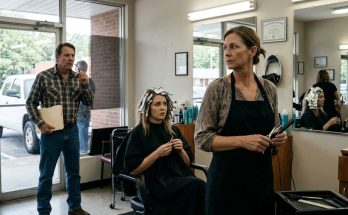
“The photograph on the identification was older than the woman standing in front of me. Her hair had been changed to resemble the picture.”
“Did you recognize the woman as Mrs. Brooks?”
“No.”
The answer was plain.
No extra words.
No apology.
My lawyer let the silence remain for a moment.
“Was there anything else you remembered about her?”
“The ring,” Joyce said.
My fingers tightened around the edge of my folder.
“She wore a green stone with two small diamonds beside it. I complimented her on it.”
“And what did she say?”
“She told me it had belonged to her grandmother.”
My lawyer placed the photograph of my grandmother on the evidence table.
I had found it in an old envelope at the bottom of a drawer.
The picture showed my grandmother sitting in her garden, her hands folded over her skirt.
The ring was visible on her left hand.
Joyce leaned forward to look at it.
“That is the ring I remember,” she said.
The judge studied the photograph.
“Can you identify the person who wore it?”
Joyce turned toward the gallery.
“Yes, Your Honor. The blonde woman who was sitting beside Mrs. Brooks’s mother-in-law.”
My husband looked back sharply.
His mother touched his sleeve.
He pulled his arm away.
“Who is she?” he whispered.
His mother did not answer.
I heard him clearly.
For months, I had imagined a moment when he would finally look at the evidence and understand what I had been saying.
Instead, he looked confused.
I could not tell whether the confusion was real.
I could not tell whether he was pretending.
I had no proof either way.
The judge asked Joyce to describe the four visits.
She explained that the woman had arrived separately on each occasion.
She remembered the identification, the ring, and the way the woman spoke.
She did not claim to remember every word of every transaction.
When the judge asked whether the withdrawals matched the dates on the slips, Joyce said they did as far as she could recall from the records presented to her.
My lawyer did not ask her to guess.
That mattered to me.
For once, nobody was asking a witness to turn uncertainty into certainty just to make a stronger argument.
Then the judge looked toward the other table.
“Has the woman identified by this witness been located?”
The clerk answered that she had appeared at the previous hearing but had requested counsel.
The judge nodded.
“Then I want her identity and her connection to these transactions addressed through the proper process. The testimony cannot simply be ignored.”
My husband's lawyer stood.
“Your Honor, we agree the testimony deserves consideration, but we have not yet established who this woman is or how she obtained the identification.”
“That is correct,” the judge said. “And that is why the matter requires further examination.”
I felt my shoulders lower a little.
It was not a victory.
The money had not come back.
The ring was still missing.
Nobody had admitted anything.
But the court was no longer treating my denial as the only thing standing between the records and the truth.
Joyce stepped down from the stand.
As she passed me, she gave a small nod.
I wanted to thank her again, but my throat had tightened.
She had risked her own peace to say what she remembered.
I would never forget that.
The judge ordered the relevant bank records preserved and directed the lawyers to address the disputed transactions before the next hearing.
Then the court recessed.
My husband stood so quickly that his chair scraped the floor.
His mother caught up with him near the door.
The blonde woman was nowhere I could see.
I stayed seated until the aisle cleared.
My lawyer touched my shoulder.
“That was important,” she said.
“Is it enough?”
“It is evidence. We still need the rest of the process.”
I looked down at the photograph in my folder.
The emerald was small in the picture.
The two diamonds were smaller still.
Yet that tiny detail had brought Joyce into the courtroom and forced people to look again at what they had accepted without question.
I slipped the photograph back into its envelope.
I was tired of being afraid that the truth would be too small to matter.
Click here to continue reading: PART 22: The Questions No One Could Answer for Me
The Money Was Gone, but My Husband Had Already Decided Who Would Be Blamed
Part 21 of 24