By May, I had developed a new routine.
I worked.
I paid my bills.
I put money into savings.
I stopped checking my parents' mortgage schedule.
It took longer than I expected to break that habit.
Sometimes, on the first morning of the month, I still reached for my phone.
I would open my banking application and expect to see the familiar withdrawal.
Then I would remember.
The transfer was gone.
My money was staying with me.
I began making practical plans.
I wanted to improve my emergency savings.
I wanted to replace a few things in my rental.
I also wanted to be ready when the right house came along.
I wasn't going to rush into another purchase.
I had already learned what happened when I made plans without protecting them.
One evening, I sat down with my notebook and calculated the payments again.
Seventy-two months.
One thousand eight hundred and fifty dollars each month.
One hundred thirty-three thousand two hundred dollars.
I wrote the number at the top of the page.
Then I added the insurance shortage.
I didn't include every small expense because I didn't have a complete record.
The total was already enough to make me uncomfortable.
I stared at the page.
For years, I had avoided thinking about the full amount.
It was easier to treat each transfer as a separate responsibility.
One payment.
Then another.
Then another.
But seeing the total changed something.
It showed me how much of my working life had gone toward preserving someone else's property.
I didn't regret helping my parents when Dad lost his job.
I regretted allowing temporary help to become an unlimited commitment.
That distinction mattered.
A few days later, Mom called.
She asked whether I could help with a household expense.
I asked what it was.
She explained that something needed attention around the house.
I asked whether Dad had checked the cost.
She said he had.
Then she mentioned that they were short.
I waited.
She didn't ask directly for money.
But I understood what she was suggesting.
I told her I couldn't contribute.
She said it wasn't a large amount.
I reminded her that I had my own expenses.
She said I used to be willing to help.
I told her I still cared.
But caring didn't mean agreeing to every request.
She became quiet.
Then she said she didn't recognize how I was acting lately.
I looked at the notebook.
The $133,200 was still written across the top.
I told her I was finally acting like someone who had to plan for his own future.
She said she needed to think about that.
Then she ended the call.
I didn't feel guilty afterward.
Not as much as I would have before.
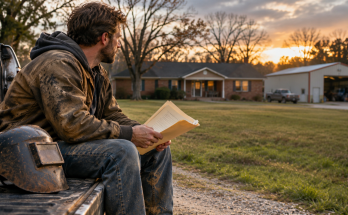
The next weekend, I visited Dad.
He was outside near the driveway.
He asked whether I could look at something on his truck.
I checked it.
We talked while I worked.
He asked about my savings.
I told him they were improving.
He nodded.
Then he said he hoped I would buy a house someday.
I told him I hoped so too.
He looked toward the workshop.
Nick was inside.
The air compressor started.
Dad said he wanted the property to stay in the family.
I told him I understood.
Then I asked whether he had ever thought about what it meant to leave one son the property and expect the other to keep paying for it.
He didn't answer immediately.
He wiped his hands on a rag.
Finally, he said he hadn't thought about it that way.
I believed him.
But that didn't make the decision less painful.
I told him I wasn't asking him to reverse the trust.
I wasn't asking him to give me something he had already promised Nick.
I only wanted him to understand why I had stopped.
He nodded slowly.
Then he asked whether I would still come around.
I told him yes.
I said I would still visit.
I would still help with ordinary things when I could.
But I wouldn't take on the mortgage.
He said he understood.
We finished looking at the truck.
I drove home before dark.
That night, I opened my savings account.
I transferred another amount into the house fund.
Then I closed the application.
I didn't need to check the balance again.
It would be there in the morning.
For once, I trusted myself to protect it.
Click here to continue reading: PART 16: I Finally Understood That Keeping the Family Together Was Never Supposed to Mean Giving Up My Place in It
For Six Years, I Thought I Was Keeping My Family Together, Until I Realized Nobody Was Saving a Place for Me
Part 15 of 20