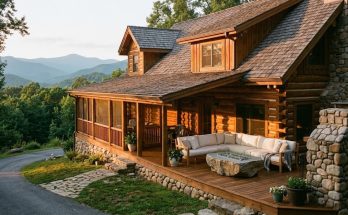
Autumn arrived slowly in the mountains that year. The trees around the cabin began changing color, and the mornings grew cooler. I spent more weekends there, sometimes alone and sometimes with James and the children. Each visit was arranged in advance, and the simple act of discussing dates and plans became part of our new family routine.
The financial matter had been addressed through the written resolution prepared with Carol's guidance. The records remained in my files, and the relevant responsibilities had been documented. I did not pretend that the experience had been pleasant, nor did I forget how quickly a generous arrangement had become a source of confusion. But I no longer felt compelled to revisit every detail whenever I saw James or Briana.
What mattered was that we had stopped allowing assumptions to replace conversations.
One crisp Saturday morning, I drove to the cabin with a basket of groceries and a small box of decorations for the autumn season. I planned to spend the weekend there alone, reading by the fireplace and preparing the house for winter. Daniel had completed the necessary maintenance, and the property was in good condition.
When I unlocked the door, the familiar scent of wood greeted me. I placed my bags on the kitchen counter, opened the curtains, and walked through the rooms. The old chairs remained beside the fireplace, and the hardwood floors still carried the marks of years of family life. Nothing needed to be changed simply because a newer version existed.
I made tea and sat at the kitchen table with Robert's letter beside me.
I had read it many times since finding it in the gray folder, but each reading reminded me of something different. At first, I had read it as reassurance that the cabin was mine to control. Later, I had read it as a reminder that Robert wanted the property to remain a place where our family could gather. Now I understood that both things could be true.
The cabin could be mine, and the memories could belong to all of us.
Ownership gave me the responsibility and authority to make decisions about the property. It did not require me to keep everyone away. Family affection gave James and the children a place in my heart and in the cabin's history. It did not give them the right to decide what happened to the property without asking me.
Those distinctions had taken months of uncomfortable conversations to establish, but they now felt simple.
That afternoon, James called to ask whether the children could visit during the next school break. He offered two possible weekends and asked which one worked better for me. I checked my calendar and chose the earlier date.
“Perfect,” he said. “We'll bring lunch and help you prepare the porch for winter.”
“That's kind of you. We'll see what needs doing when you arrive.”
He laughed.
“Dad would probably have given us a list before we even parked.”
“He certainly would have.”
After the call, I smiled at the thought of Robert standing on the porch with his hands on his hips, inspecting every board and asking whether we had remembered to secure the tools. The memory no longer made me feel that the cabin was slipping away from me. It reminded me that I could keep his presence alive by caring for the place he had helped build.
A few days later, Briana sent me the photographs from the family dinner. There were pictures of the children standing beside the creek, Elaine arranging the dishes, and James laughing with Michael on the porch. One photograph showed me sitting at the head of the table, smiling while everyone talked around me.
I saved the pictures in a folder on my computer and printed the best one. Then I placed it beside the older photograph of Robert and James on the unfinished porch.
The two images told a story that neither could tell alone. One showed the work that had gone into building the cabin; the other showed the family that had grown around it. The property had connected our lives across decades, and I wanted that connection to continue.
What I no longer wanted was the belief that keeping a family together required one person to surrender every boundary.
On the next visit, James and the children arrived just after ten in the morning. They brought sandwiches, fruit, and a small container of cookies the children had helped bake. We spent the afternoon clearing fallen leaves from the porch and checking the outdoor furniture before the weather turned colder.
At one point, my grandson asked whether he could move a small table closer to the fireplace.
“Let's check where it fits best,” I said.
He waited while I moved a chair, then helped me position the table.
“Like this?” he asked.
“That's perfect.”
The exchange was ordinary, but it made me think about everything I had learned. A request did not diminish anyone. Asking permission did not mean a person was unwelcome. It simply allowed everyone to participate in a decision without pretending that their preferences were the only ones that mattered.
Later, James helped me carry a box of tools into the storage room. He looked around at the shelves and smiled.
“I remember Dad keeping everything in exactly the same place.”
“He believed that if you put something away properly, you could find it when you needed it.”
James laughed.
“I could never understand why he got so annoyed when I left the hammer on the porch.”
“Because he knew you'd spend twenty minutes looking for it the next morning.”
We both laughed, and for a moment I could hear Robert's voice in the room.
That evening, after the children had gone to bed, James and I sat by the fireplace. We talked about his work, the children's school activities, and the plans he and Briana were making for the coming year. He told me that they had become more careful about discussing major expenses before committing to them.
“I think the whole account situation forced us to look at how we make decisions,” he said.
“I'm glad you've taken something useful from it.”
“I don't want to repeat it.”
“Then keep communicating,” I replied. “And remember that asking for help is different from assuming it will always be available.”
He nodded.
Before he went to bed, he asked whether I had decided what would happen to the cabin eventually.
I considered the question.
“Not yet,” I said. “I've been reviewing my estate arrangements with Carol, but I'm not making a decision just because anyone expects me to.”
“I understand.”
“I may leave the cabin to you someday. I may make another arrangement that better fits my circumstances. What I won't do is make that decision out of guilt or pressure.”
James looked toward the fireplace.
“That's fair, Mom.”
I believed he meant it.
The following morning, we made breakfast together. The children helped set the table, and James packed the leftover food before everyone prepared to leave. When he hugged me goodbye, he told me he would call later in the week to check on the maintenance schedule.
I smiled.
“Call whenever you like, sweetheart.”
He paused, then added, “And if we want to come back, we'll ask.”
“I know.”
After the car disappeared down the mountain road, I walked back into the cabin and stood in the living room. Sunlight streamed through the windows, falling across the floor Robert had installed years earlier. The fireplace stones stood exactly where we had placed them, and the photographs on the shelf reminded me of the people who had filled this home with laughter.
I no longer felt the need to defend every corner of the property against an imagined future invasion. I had established clear arrangements, documented the financial matters, and made certain that my wishes would be respected. I could now enjoy the cabin without wondering whether a simple act of generosity would be interpreted as permission for something more.
I took Robert's letter from the folder and placed it on the table beside my cup of tea.
His words had helped me remember why we had built the cabin, but the final decision about its future remained mine. I didn't have to choose between honoring his memory and protecting my independence. I could do both.
I would keep the cabin for as long as I wanted it. I would invite my family when I wished, and I would make decisions about improvements, finances, and ownership with care. If I eventually chose to leave the property to James, I would do so because it was the right decision for me, not because anyone had assumed it was already theirs.
That was the freedom I had nearly forgotten I possessed.
Before leaving, I checked the doors, turned off the lights, and walked onto the porch one final time. The mountains stretched into the distance beneath a clear autumn sky. I remembered Robert standing there with sawdust in his hair, dreaming about the life we would build together.
I wished he could have seen the family dinner, the photographs, and the children running through the yard. I wished he could have watched James learn to take responsibility for his decisions and Briana learn to ask rather than assume.
But I knew that the lessons we had learned were ours to carry forward.
I locked the cabin and placed the key in my bag.
As I drove down the mountain, I thought about the text that had started everything. At 6:43 that morning, Briana had told me the cabin would be “just for our family,” as though I were an outsider.
She had been wrong about who belonged there.
But the deeper lesson was not that I owned the deed or that I had the final say. It was that belonging should never require one person to pretend they have no rights of their own.
I could be a loving mother without financing every decision my son made. I could be a welcoming mother-in-law without allowing someone else to dictate how I used my home. I could cherish the family Robert and I had built without promising away my future.
The cabin was mine.
The memories belonged to all of us.
And the future would remain open—not because anyone had claimed it, but because I had chosen to leave room for it.
The End
Read more original stories on Feel Every Story.
At Thirty-Seven Years of Marriage, One Doctor’s Question Revealed What My Husband Had Buried for Eighteen Years
Part 20 of 20