The drive from Nashville to Knoxville should not have felt unfamiliar.
I had made long drives before.
I knew how to settle into the road, keep my attention forward, and let the miles pass.
That morning, I could not settle into anything.
My hands stayed tight on the steering wheel.
Every time my phone caught my attention, I hoped Maggie's name would appear.
It never did.
I kept thinking about our last conversation.
She had stood in the kitchen with her reading glasses pushed up on her head.
She had explained the plan as if she were going away for a short holiday.
Two weeks.
That was all.
I had watched her put the casserole dish into the back seat.
I remembered the towels wrapped around it so the lid would not shift.
It was such an ordinary thing to remember.
I held on to it anyway.
The casserole dish belonged to the life we had built together.
It belonged to Sunday dinners, birthdays, and the meals Maggie took to people who needed help.
It belonged to a woman who had never been good at doing things halfway.
I wanted to believe that woman was simply busy helping our son.
I also knew I was driving toward something I did not want to find.
The highway continued ahead of me.
I passed exits without noticing their names.
I checked the time more often than I needed to.
I thought about calling Kevin again, but I could already hear his answer.
She was resting.
She was tired.
I was worrying over nothing.
That was how he had spoken for months whenever I asked questions he did not want to answer.
I had let him get away with it because he was my son.
There is a particular kind of foolishness that comes from wanting to believe the best about your own child.
You tell yourself that a bad explanation is better than a bad truth.
You keep making room for another excuse.
Then, one day, you realize that the excuses have become part of the problem.
I was thinking about that when I reached Kevin's neighborhood.
Everything looked orderly.
The lawns were cut.
The houses stood at comfortable distances from one another.
Brick mailboxes marked the driveways.
Large trees shaded the road.
It was the sort of place where people expected their lives to be peaceful.
Kevin's house stood near the end of the street.
I recognized the white shutters and the wide porch.
I also noticed the curtains.
They were closed.
I did not know why that detail bothered me.
Perhaps it was because Maggie liked daylight.
She opened curtains in the morning and closed them when the evening came.
She said a room felt smaller when it was kept dark for no reason.
I parked my truck at the curb.
For a moment, I stayed behind the wheel.
I looked at the house and waited for my phone to ring.
It did not.
I stepped out.
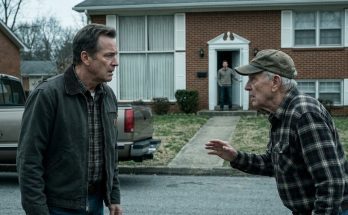
Before I could reach the walkway, a man came from the house across the street.
He was older, thin, and dressed in a flannel shirt.
He moved quickly despite his age.
His face told me that he had something urgent to say.
He did not begin with a greeting.
“Are you family to the woman staying over there?”
I looked toward Kevin's house.
“She's my wife.”
I introduced myself.
The man told me his name was Earl Hutchins.
He barely paused before pointing toward the house.
“You need to get an ambulance on the way before you enter that place.”
I felt my stomach tighten.
“What happened?”
Earl glanced at the upstairs windows.
Then he looked directly at me.
He said he had seen Maggie through the front window several days earlier.
She had been sitting at the kitchen table.
At first, he thought she was tired.
Then her head began to droop.
She could not seem to keep herself upright.
Finally, she slipped out of the chair.
I stared at him.
For a moment, I could not make myself ask the next question.
“What did Kevin do?”
Earl's expression hardened.
He had called out to my son.
Kevin had told him that Maggie was fine.
He claimed she had drunk too much wine with dinner.
Earl did not believe him.
He had watched the house for a long time, waiting for somebody to help her.
Nobody did.
I felt something cold settle inside me.
“Did you call for help?”
“I did.”
He explained that medical responders had come to the house.
Kevin had met them at the door.
According to Earl, my son had told them that Maggie had already spoken with a doctor and that the situation was under control.
They had left.
I looked at Kevin's front door.
I could not understand how those words could have been spoken about my wife.
I could not understand how anyone could look at a woman who could not hold herself upright and decide that nothing needed to be done.
But I knew what Earl had seen.
I knew what I had been told.
And I knew Maggie had not answered me for days.
I pulled out my phone.
My hands were shaking, so I steadied one against the side of my truck.
The dispatcher answered.
I gave the address.
I explained that my wife had been staying at the house and had not responded to my calls.
I repeated what Earl had witnessed.
I told the dispatcher that I believed Maggie needed immediate medical attention.
The questions came one after another.
I answered as clearly as I could.
Then I ended the call.
Earl remained beside me.
Neither of us said much.
Across the street, Kevin's house looked exactly as it had a few minutes earlier.
White shutters.
Closed curtains.
A quiet porch.
Nothing about the outside suggested that something was terribly wrong inside.
That was what frightened me most.
I thanked Earl.
He nodded, but he did not move away.
I understood why.
He had already tried to help once.
Now he was watching me go where he had been unable to make anyone listen.
I walked toward the front door.
Every step made the distance seem longer.
I had come to Knoxville to bring my wife home if she needed a break.
I had expected an explanation.
I had expected an argument about whether I was overreacting.
I had not expected to stand outside my son's house wondering whether my wife had been left without help.
I reached the door.
Before I could knock a second time, it opened.
Kevin stood in the doorway.
He looked surprised to see me.
Not frightened.
Not relieved.
Surprised.
And I knew, before he said anything, that I was not going to like the explanation he had prepared.
Click here to continue reading: PART 3: My Son Tried to Explain Away Four Days of Silence, but the Look on His Face Told Me to Keep Moving
The Morning My Wife Stopped Answering, I Finally Understood That Silence Could Mean Something Far Worse Than Anger
Part 2 of 16