I worked my shift on Monday.
I did not attend Dad's character assembly.
I had not been invited, and I had no reason to go.
I focused on the patients in front of me and kept my phone in my bag.
During lunch, I checked it.
There was a message from Mom.
She said Dad had spoken with the principal that morning.
She did not give me many details.
She only said the meeting had been difficult and that Dad had not led the assembly as originally planned.
I read the message twice.
I felt a complicated mixture of sadness and relief.
I had never wanted my father to lose his place at the school.
I had never set out to damage his career.
But I could not make the questions disappear by signing a statement that was not true.
The principal had to make decisions based on what the school knew.
Dad had to answer for his own choices.
I could not do either of those things for him.
I wrote back to Mom that I was sorry the day had been difficult.
Then I put my phone away.
The rest of the shift passed without anything unusual happening.
I helped patients, checked the next day's schedule, and finished my work.
When I left, I took the bus back to the room I had rented.
It was slower than driving.
I had to wait in the cold for a few minutes at one stop.
But I reached home safely.
I put my bag on the desk and began preparing dinner.
The room was quiet.
I thought about how much had changed in a short time.
A week earlier, I had been sitting in the Corolla outside my parents' house, trying to keep warm while watching the windows.
Now I was in a place where I could decide when to go to bed and when to wake up.
I could invite a friend over without asking Dad.
I could work late without wondering whether a chain would be fastened against me.
The freedom was ordinary.
That was what made it matter.
Later that evening, Mom called.
She sounded tired.
She told me Dad had been upset after the meeting with the principal.
She said he believed people had already made up their minds about him.
I listened.
I did not tell her that he had brought this on himself.
I did not tell her that he deserved to be embarrassed.
I knew how painful it was to watch someone you loved face consequences.
I also knew that love could not require me to change the facts.
Mom said Dad wanted to know whether I would consider returning home if he agreed to stop discussing the story.
I sat down on the bed.
I had imagined hearing something like that.
A part of me had hoped he might offer an apology.
But this was not an apology.
He was asking whether I would return if we stopped talking about what had happened.
I told Mom I was not ready to move back.
She asked whether I planned to stay in the rented room permanently.
I said I did not know yet.
I was still adjusting to the cost and the transportation.
I wanted to keep saving money and eventually find a place that suited me better.
But I did not want to return to the old arrangement simply because Dad no longer wanted to discuss the argument.
Mom was quiet.
Then she asked whether I still loved him.
The question hurt.
“Yes,” I said.
I did love my father.
I remembered the times he had helped me with schoolwork, the family meals, and the ordinary moments when we could talk without anyone being angry.
Those memories had not disappeared.
Neither had the night in the car.
I could hold both things in my mind.
I could love him and still believe he had treated me wrongly.
I could miss my family without returning to a situation that made me afraid to speak honestly.
Mom said she hoped we would find a way to repair things.
I told her I hoped so, too.
We ended the call.
The next day, I received a message from Dana.
She said Walt was doing well enough to talk for a while and asked whether I would like to visit him when I had time.
I agreed.
We arranged a visit for a day when I was not working.
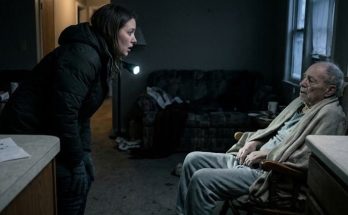
When I saw Walt, he was resting comfortably.
His wrist was still being treated, and he moved carefully.
He thanked me for stopping on County Road 75.
I told him he did not need to keep thanking me.
He said he knew.
Then he told me that he remembered being frightened in the ditch and hearing a car stop.
He had not known whether anyone would come to help.
I sat beside him and listened.
He did not ask about the television story.
He did not ask me to explain what had happened with my father.
He simply thanked me for staying until the ambulance arrived.
I was grateful for that.
Before I left, I returned the army blanket Dana had lent me.
She accepted it and asked how I was managing in the new room.
I told her I was getting used to it.
She said she was glad.
I thanked her for the coffee, the blanket, and the way she had checked on me afterward.
She waved away the thanks.
She said her father had needed help, and I had helped him.
That was enough.
I drove away thinking about the night the blizzard had brought all of us together.
I had stopped because Walt was hurt.
I had not known who he was or what his daughter would do.
I had not expected the story to reach thousands of people.
I certainly had not expected to move out of my parents' house because of it.
But helping him had reminded me of something I had forgotten.
Doing the right thing did not guarantee that people would treat me well.
It did not guarantee that my family would agree with me.
It did not even guarantee that the truth would make everything easier.
Sometimes the right choice simply left me with a harder road to travel.
I returned to my room that evening and checked my budget.
I was spending more than I had planned.
The bus journey took time, and I had to be careful about every expense.
I would need to rebuild my savings gradually.
I would need to keep working and pay down my loans.
There were still practical problems to solve.
But I had a plan.
I was no longer waiting for Dad to decide when I could leave.
Tyler and I began talking occasionally.
Our conversations were cautious at first.
He did not suddenly become brave, and I did not pretend that his silence had not hurt me.
But he had admitted what he knew about that night.
He had acknowledged that he should have said something.
We had somewhere to begin.
Mom continued to call.
Sometimes we talked about ordinary things.
Sometimes she asked whether I would reconsider moving home.
I told her I was not ready.
She did not always like that answer, but she began to accept it without turning every conversation into an argument.
Dad and I spoke less often.
When we did, the conversations were brief.
He did not offer the apology I had hoped for.
I did not give him the retraction he wanted.
For a while, I thought that meant nothing would ever change between us.
Then I realized that change did not always begin with a dramatic conversation.
Sometimes it began when I stopped repeating a lie.
Sometimes it began when I answered a question honestly and let the other person decide what to do with the answer.
Sometimes it began when I went to bed knowing that nobody could punish me for coming home from work late.
I still thought about the index card.
Three sentences in blue ink.
I could picture Dad tapping it with his finger, expecting me to repeat his words as if they were my own.
For years, I had treated his certainty as proof that he was right.
I had confused obedience with goodness.
I had confused keeping quiet with keeping a family together.
I had believed that if I never disappointed him, he would eventually trust me to make my own decisions.
I was wrong about that.
Being a good daughter did not mean agreeing with everything my father said.
It did not mean accepting an unfair rule because challenging it might upset him.
And it did not mean lying about what happened to protect the reputation he had spent twenty-six years building.
I had helped Walt because he needed help.
I had stayed at the hospital because patients needed care.
I had spoken to the reporter because she asked me a question, and I refused to lie.
Those choices cost me something.
I lost the comfort of living in my childhood home.
I lost the easy routine of driving to work whenever I needed to.
I lost the belief that my father would always choose my safety over his pride.
I was still grieving those losses.
But I had not lost my job.
I had not lost my ability to support myself.
I had not lost the memories of the good parts of my family.
And I had not lost the right to tell the truth about my own life.
One evening, weeks after the blizzard, I sat at the small desk in my room and looked at the budget I had made when I first started saving to move out.
The original plan had been to leave in June.
I had not followed that plan.
I had left earlier, with less money and more uncertainty than I wanted.
But I was managing.
I put the budget away and prepared my clothes for the next shift.
Then I checked the time.
There was no curfew to beat.
No chain to worry about.
No note waiting on the other side of a locked door.
I turned off the light and went to bed.
The cold night had changed my life, but it had not decided who I would become.
That part was still mine.
And for the first time, I was willing to live as if I believed it.
The End
Read more original stories on Feel Every Story.
The Night I Learned That Being a Good Daughter Could Leave Me Freezing Outside My Own Home
Part 20 of 20