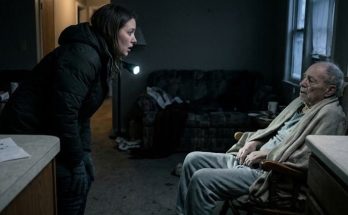
I used to think the worst part of being a soldier was learning how to face a bad situation without letting fear take over.
I was wrong.
Sometimes the hardest thing was walking into a familiar room and realizing the people you trusted had done something you couldn't explain away.
That Thanksgiving, I was thirty-two years old, a Sergeant in the United States Army, and tired enough to dream about a quiet evening before I even reached home.
I'd spent three hours driving from Fort Bragg through icy roads and falling snow.
My hands ached from gripping the steering wheel.
My shoulders were stiff.
The groceries I'd bought at Walmart sat beside me, and I kept thinking about the meal I'd planned to prepare.
Nothing special.
Just turkey, potatoes, and a bottle of wine Victor liked.
I wanted a warm room, a little football on television, and the kind of evening when nobody expected anything from me.
I wanted to stop being a soldier for a few hours.
I wanted to be a wife.
When I finally reached the house in Fayetteville, I expected to see lights behind the windows.
There were none.
At first, I assumed Brady and Elaine had stepped out.
Maybe they'd gone to buy something for dinner.
Maybe they'd left the lights off because they were saving electricity.
I carried those explanations with me as I got out of the car.
The cold went straight through my clothes.
I hurried to the door with my grocery bags and unlocked it.
Then I stepped inside.
The first thing I noticed was the temperature.
It was so cold that I stopped moving.
The warmth I'd expected wasn't there.
Neither was the familiar sound of the heating system.
I stood in the entryway, waiting for my eyes to adjust to the darkness.
Nothing moved.
I could see the faint outline of furniture, but the rest of the house seemed to have disappeared.
I called out.
“Brady?”
My voice sounded strange in the empty rooms.
I waited for an answer.
There wasn't one.
“Elaine?”
Still nothing.
I set the grocery bags down long enough to feel along the wall for a light switch.
When the lights came on, the rooms looked ordinary at first glance.
That almost made the situation worse.
The furniture was where it belonged.
The doors were closed.
Nothing looked as though there had been a struggle.
But the air was bitterly cold, and the heating system wasn't running.
I rubbed my hands together.
Then I noticed the smell.
It wasn't the smell of a house that had been empty for a few hours.
It was heavier than that.
Unwashed clothes.
Urine.
The unmistakable odor of someone who'd been unable to care for himself.
My stomach tightened.
I'd encountered that smell overseas while working around a military field hospital.
It brought back memories I hadn't expected to carry through the front door of my own home.
I put the groceries aside.
I followed the smell toward the living room.
And then I saw Victor.
He was sitting in his old rocking chair.
At first, he looked as though he'd fallen asleep while waiting for somebody.
A thin blanket rested across his shoulders.
His head leaned forward.
His hands were still.
I took another step.
“Victor?”
He didn't answer.
I moved closer.
He was seventy-two years old, a retired Marine, and a man who'd spent much of his life carrying himself with a kind of quiet authority.
Even after his cancer diagnosis, he'd tried to keep that part of himself.
He didn't like being treated as helpless.
He didn't like people fussing over him.
But the man in that chair barely looked like himself.
His face was pale.
His lips were cracked.
His clothes were soaked, and there was a puddle beneath the chair that had begun to freeze against the floor.
For a moment, I couldn't understand what I was seeing.
Then I understood enough.
“Victor!”
I rushed to him.
His eyelids moved.
He looked at me without seeming certain I was real.
“Jenna?”
His voice was so faint that I had to lean closer.
“Is that you, angel?”
I touched his forehead.
His skin was cold and damp.
I looked around for water.
There was none within reach.
I searched for his medication.
I couldn't see it beside him.
He had been left in that chair without the things he needed most.
I looked at his thin blanket and the frozen patch beneath his feet.
My mind began racing through possibilities.
Perhaps Brady had gone out.
Perhaps Elaine had planned to return before the weather became worse.
Perhaps something had happened to the heating system.
I wanted one of those explanations to be true.
I wanted any explanation that didn't require me to believe my own family had abandoned a dying man.
But Victor couldn't stand without help.
He couldn't fetch himself a drink.
And he had been sitting there long enough for his condition to become frightening.
I knelt beside him.
“I'm here now,” I told him.
He tried to answer, but I couldn't make out the words.
I needed to know how long he'd been alone.
I needed to know where his medication was.
Most of all, I needed to find out why nobody had taken care of him.
I stood and looked toward the kitchen.
That was when I saw the bananas.
Three of them sat on the island, their skins turning brown.
Beside them was a folded piece of paper.
I recognized Brady's handwriting before I picked it up.
My husband had left a note.
I unfolded it.
The message was brief.
He and his mother had gone on a last-minute Carnival cruise.
They needed a break, he'd written.
Since I was coming home, I could take care of Victor.
He'd been difficult lately.
They would be back Monday.
I read it again.
Then I looked toward the living room.
Victor was still sitting in the chair.
The blanket was still across his shoulders.
The cold hadn't changed.
Neither had the smell.
I held the note in my hand and tried to make the words mean something else.
They didn't.
Brady knew I was coming home.
He knew his father was sick.
He knew Victor needed help.
And he and Elaine had left anyway.
I lowered the paper.
For the first time that evening, I stopped looking for an innocent explanation.
I had found my answer.
They had gone on vacation.
Victor had been left behind.
Click here to continue reading: PART 2: The Note on the Kitchen Island Explained Their Absence, but the Condition of Victor’s Clothes Told Me How Long He Had Suffered
I Thought I Was Coming Home for Thanksgiving, Until the Cold Inside That House Told Me Something Was Terribly Wrong
Part 1 of 20