That night, Dale and I went to bed later than usual.
Neither of us had much to say.
I lay on my side, looking at the faint outline of the ceiling.
The house made its ordinary nighttime noises.
A board creaked somewhere.
The heating system started.
Then everything settled again.
I kept thinking about the dollar.
When my parents sold us the farmhouse, I was twenty-six years old.
It was 2006.
They had moved into town and wanted me nearby.
The arrangement had seemed sensible at the time.
I was getting married, and they had a house they no longer wanted to live in.
They sold it to me for a dollar.
I had never forgotten that.
But I had never understood the dollar as a promise that they could reclaim the property whenever they needed it.
They had transferred the house to me.
Dale and I had made it ours.
There was a difference between remembering where something came from and being expected to hand it back.
I rolled onto my other side.
Dale was still awake.
He had been quiet for so long that I assumed he had fallen asleep.
Then he spoke.
He reminded me that he lived there too.
He said the house belonged to both of us in the ways that mattered.
Then he told me he would stand behind whatever I decided.
I wanted him to tell me what to do.
I wanted him to say my parents were wrong and that I should refuse.
Or I wanted him to say we could make room for Jeff without risking anything important.
Instead, he left the choice with me.
That was harder.
I stared into the dark for a long time.
My parents had raised us to believe family should help family.
I believed that too.
I still do.
But somewhere along the way, I had learned that helping somebody and surrendering everything to them were not the same thing.
I was ashamed that I even had to remind myself of that.
Jeff was my brother.
He was forty-three years old, newly separated from his wife, and trying to figure out what came next.
His children had lost the life they knew.
They had not chosen any of it.
I imagined Brody trying to act older than twelve.
I imagined Kenzie keeping quiet because she didn't want to make things harder for her father.
I thought about Cole, who was only six.
I couldn't make myself picture him carrying his belongings from one temporary place to another without feeling something tighten in my chest.
Still, the farmhouse was not empty.
It wasn't waiting for somebody to claim it.
It was where Dale and I lived.
We had worked on it for twenty years.
The money alone was enough to make the request difficult.
There had been a new roof.
There had been a propane furnace.
There had been the wiring, which we had removed and replaced because the old system was no longer something we could trust.
There were countless smaller repairs that never made it into a conversation because they were simply part of owning an old house.
I kept the receipts in a spiral notebook in the hutch.
I had started saving them because I wanted to know what the work was costing us.
Over time, the notebook became a record of how much we had put into the place.
The total was $60,340.
I could recite it without looking.
That number had become familiar because I had added it so many times.
But the money was not the only thing I was afraid of losing.
If I handed the farmhouse back, what would happen to all the years Dale and I had spent building our life there?
Would my parents see those years as a gift we had given the house?
Would they even think about them?
Or would the whole arrangement become simple in their minds?
They had sold it for a dollar.
Now they wanted a dollar.
Nothing else needed to be said.
I turned toward the ceiling again.
It was nearly two in the morning.
I had not found an answer.
I was tired, but every time I closed my eyes, I saw my parents sitting across from me.
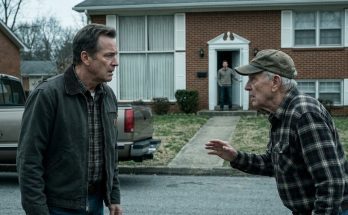
Mom's coat.
Dad's cap.
The way neither of them had mentioned the repairs.
The way they had spoken about Jeff's need as if it settled the matter.
I could have told myself they were being selfish.
Maybe they were.
But I also knew they were worried about their son and his children.
I could understand their worry without agreeing to their solution.
That distinction mattered.
I had spent too much of my life trying to make other people comfortable before I allowed myself to admit what I wanted.
I didn't want to start doing that with my home.
At the same time, I couldn't bear the thought of those children sleeping beside a chest freezer in a basement.
I knew where my parents had been keeping them.
I knew there wasn't enough space.
I knew Jeff was struggling.
If I simply refused, I would still be lying awake thinking about them.
And if I agreed to return the house, I would be giving away something Dale and I had built together.
There had to be another answer.
I sat up in bed.
Dale shifted beside me but didn't wake.
For a moment, I looked around our bedroom.
Then I looked above me.
I had been thinking about the farmhouse as though the only choices were to keep everything exactly as it was or give the whole place away.
I had forgotten that the house had space we weren't using.
Two bedrooms upstairs had been shut for years.
We had closed them off to save on propane.
They had become rooms we passed without thinking about them.
Rooms full of dust and old things.
Rooms that were still part of our home, even when we weren't using them.
I sat there in the dark.
The answer wasn't easy.
It wasn't free.
It would mean opening our house to a brother who was hurting and three children who needed somewhere to settle.
It would mean giving up privacy.
It would mean more cooking, more cleaning, more noise, and more people trying to find their place in a house that already belonged to a family.
But it would not mean signing away the farmhouse.
I lay back down.
For the first time that night, my thoughts began to slow.
I hadn't solved every problem.
I had found a way to begin.
Click here to continue reading: PART 3: By Saturday Morning, the Upstairs Rooms Were Open Again, and I Was Preparing for More Than Three Children and Their Father
The Evening My Parents Came to Ask for Something They Had No Right to Assume I Would Give Them
Part 2 of 16