I swallowed.
Then nodded.
“All right.”
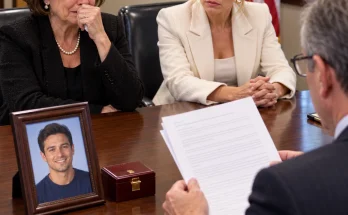
Brianna’s attorney contacted Rebecca.
There were letters.
Requests for records.
Questions about the trust.
And disagreements about the property’s use.
The process took time.
But eventually, after reviewing the documents and negotiating practical arrangements, Brianna agreed to vacate the house.
She had received other assets under Nathan’s estate plan.
She was not left penniless.
But she was furious that the house wasn’t hers to sell.
The day she moved out, I didn’t go.
I stayed with my friend Helen.
Helen had been my neighbor years earlier.
She’d invited me to stay in her guest room when she learned what happened.
“You should have called me sooner,” she said.
I smiled sadly.
“I didn’t want to impose.”
She rolled her eyes.
“Eleanor, you’re sixty-eight. You can stop apologizing for needing a bed.”
I laughed.
Then cried.
She hugged me.
And I realized that even after losing Nathan, I wasn’t entirely alone.
Three months after the funeral, I returned to Willow Creek Drive.
Rebecca met me at the house.
She handed me a key.
I stared at it.
The metal felt cold in my palm.
“Ready?” she asked.
I nodded.
We walked toward the front door.
The roses beneath the kitchen window were blooming.
Yellow.
Bright.
Beautiful.
Nathan had planted them for me.
I touched one of the petals.
Then unlocked the door.
The house smelled different.
Brianna had removed most of the furniture she’d owned.
The walls looked bare.
The living room echoed.
But the sunlight still fell through the windows in the same way.
The kitchen still overlooked the backyard.
And Nathan’s old coffee mug remained on a shelf.
I picked it up.
Held it carefully.
Then sat at the kitchen table.
For a long time, I didn’t move.
Rebecca waited near the doorway.
Finally, I whispered, “I’m home.”
The first night was difficult.
Every room reminded me of Nathan.
His laughter.
His footsteps.
His voice calling from the hallway.
I cried while making dinner.
Cried while washing dishes.
Cried when I passed the downstairs bedroom where he’d spent his final months.
But grief felt different there.
At the motel, it had been mixed with fear.
Fear about money.
Fear about where I’d sleep.
Fear about what would happen next.
At home, grief was still painful.
But it had room to breathe.
I could sit in the garden.
Look at the roses.
Hold Nathan’s sweater.
And remember him without wondering whether someone would tell me to leave.
Over the next year, I slowly rebuilt my life.
I joined a local gardening club.
Volunteered at a community center.
Started attending a grief support group.
And reconnected with friends I’d neglected while caring for Nathan.
I wasn’t suddenly happy.
I missed my son every day.
Some mornings, the pain felt as sharp as it had the day he died.
Other mornings, I could remember something funny he’d said and smile before the tears came.
I learned that grief doesn’t move in a straight line.
It changes shape.
It becomes part of the life you continue living.
Brianna and I didn’t speak for almost a year.
Then one afternoon, she called.
I stared at her name on the screen.
I considered letting it ring.
But eventually, I answered.
“Hello?”
“Eleanor?”
Her voice sounded different.
Tired.
Uncertain.
“Yes?”
There was a long silence.
Then she whispered, “I’ve been thinking about Nathan.”
My throat tightened.
“So have I.”
She began crying.
“I miss him.”
I closed my eyes.
“I know.”
She swallowed.
“I was angry after he died.”
I said nothing.
She continued.
“I was scared.”
I looked toward the garden.
“Brianna, I understand being scared.”
She began crying harder.
“But you hurt me.”
Silence.
I continued.
“You told me to leave my son’s home on the day we buried him.”
Her voice broke.
“I know.”
“You made me feel like I had no place in his life.”
She sobbed.
“I know.”
I took a breath.
“And I need you to understand that grief doesn’t excuse that.”
She whispered, “I’m sorry.”
I closed my eyes.
For a long moment, neither of us spoke.
Then I said, “Thank you for saying that.”
We didn’t become close overnight.
There were too many painful memories.
Too much mistrust.
Too much grief.
But gradually, we began speaking occasionally.
At first, about Nathan.
His favorite foods.
His terrible jokes.
His habit of leaving tools on the kitchen counter.
Then about ordinary things.
Work.
Weather.
Life.
Brianna eventually admitted that she’d been terrified about her financial future after Nathan’s diagnosis.
She’d assumed the house would be hers.
She’d built plans around selling it.
And when she learned Nathan had protected my right to remain there, she’d felt betrayed.
I listened.
Then told her something important.
“Brianna, Nathan loved you.”
She began crying.
“I know.”
“He wanted you to be secure.”
She nodded.
“But he wanted me to be secure too.”
She looked down.
I continued.
“Those things weren’t supposed to be enemies.”
She wiped her eyes.
“I understand that now.”
I hoped she did.
Two years after Nathan died, Brianna visited the house for the first time.
She stood on the porch holding a small cardboard box.
I opened the door.
“Hello, Brianna.”
She smiled nervously.
“Hi, Eleanor.”
I stepped aside.
“Come in.”
She entered slowly.
Her eyes moved around the living room.
Then toward the kitchen.
“It looks nice.”
“Thank you.”
She swallowed.
“I brought something.”
She handed me the box.
Inside were photographs.
Nathan as a teenager.
Nathan on his wedding day.
Nathan laughing beside a lake.
Nathan holding a ridiculous birthday cake shaped like a toolbox.
I began crying.
Brianna wiped her eyes.
“I found these while sorting through storage.”
I looked up.
“Thank you.”
She nodded.
“I thought you should have them.”
I held the box carefully.
Then said, “Would you like some tea?”
She hesitated.
Then smiled faintly.
“Yes.”
We sat at the kitchen table.
The same table where Nathan used to drink his morning coffee.
For the first time since his death, Brianna and I spoke about him without arguing over what he’d left behind.
That afternoon, we walked into the garden.
The roses were blooming.
Brianna stopped beside them.
“Nathan planted these for you, didn’t he?”
I nodded.
“Yes.”
She smiled sadly.
“He was so proud of them.”
I laughed softly.
“He planted them too close together.”
She laughed through tears.
“He did.”
I looked toward the flowers.
“He wouldn’t let me move them.”
Brianna smiled.
“He said they’d figure it out.”
We both laughed.
Then cried.
And for one brief moment, grief made us companions instead of enemies.
Three years after Nathan’s death, I received a letter from Mr. Harrison.
It concerned the trust’s annual administration.
There were financial statements.
Maintenance expenses.
Property records.
And a brief note reminding me that the arrangements Nathan had made remained in effect.
I placed the letter beside his photograph.
Then sat down with a cup of tea.
I thought about the day Brianna told me to leave.
The motel.
The will reading.
The final section.
The letter from my son.
The legal process.
The return home.
And the slow rebuilding of a life I hadn’t expected to continue living.
I realized something.
Nathan hadn’t left me a house because he thought I was helpless.
He’d left me security because he knew how much I’d already carried.
He wanted me to have a place where I could grieve without fear.
A place where I could grow older without feeling unwanted.
A place where I could remember him.
People sometimes ask whether I think Nathan was unfair to Brianna.
I understand the question.
She was his wife.
They had built a life together.
She had cared for him during a devastating illness.
And she was grieving too.
But Nathan’s estate plan provided for her separately.
He hadn’t tried to leave her with nothing.
He’d simply made sure that caring for his wife didn’t require leaving his mother without a home.
Those were two different responsibilities.
And he’d tried to honor both.
On the fourth anniversary of Nathan’s death, I planted another rosebush.
A white one.
Beside the yellow roses.
Helen came over to help.
We dug the hole together.
Mixed compost into the soil.
Set the roots carefully.
Then watered the plant.
Helen stepped back.
“Beautiful.”
I smiled.
“Yes.”
She looked at me.
“Why white?”
I stared at the flowers.
“Because Nathan always said yellow roses reminded him of sunshine.”
Helen nodded.
“And white?”
I smiled sadly.
“Peace.”
She reached for my hand.
We stood together in the garden.
And for the first time in years, I felt something close to it.
That evening, I sat on the porch with Nathan’s letter.
The paper had softened from being unfolded so many times.
I knew every word.
But I read it again.
You belong somewhere nobody can tell you you’re an inconvenience.
I looked toward the house.
The windows glowed warmly.
The roses moved in the evening breeze.
And I thought about the woman I’d been when I drove away at four in the morning with four suitcases and a box of photographs.
She’d believed she had lost everything.
Her husband.
Her son.
Her home.
Her place in the world.
But she hadn’t lost everything.
She’d lost the people she loved most.
And that loss would always matter.
Yet she’d also discovered that her life still deserved protection.
That her grief still deserved dignity.
And that the love Nathan had given her did not disappear simply because he was gone.
Years later, when people ask about the will reading, they often focus on Brianna’s expression.
The way her smile vanished.
The way she froze when Mr. Harrison mentioned the trust.
The way she discovered that the house she’d planned to sell wasn’t hers to control.
But that’s not the moment I remember most.
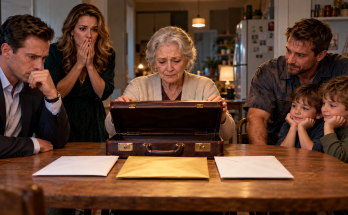
I remember the envelope.
My name written in Nathan’s handwriting.
The first line of his letter.
And the realization that even while facing the end of his own life, my son had been thinking about how to protect mine.
I remember holding that paper.
And hearing his voice in every sentence.
The day we buried Nathan, Brianna told me I no longer belonged in his house.
She believed she could erase my place in his life by changing the locks.
She believed the will would prove I had nothing.
And for several terrible days, I believed her.
Then the lawyer turned one final page.
And my son, through the arrangements he’d made while he was alive, gave me something I hadn’t expected.
Not wealth.
Not revenge.
Not victory over his wife.
He gave me a place to grieve.
A place to remember.
A place to grow old.
A place to belong.
Brianna thought the final section of the will would leave me with nothing.
Instead, it revealed that my son had spent his final years making sure I would never be left with nowhere to go.
And every morning, when I open the curtains and see the yellow roses beneath the kitchen window, I whisper the same words.
“Thank you, Nathan.”
Then I make my coffee.
Sit in my favorite chair.
And remember the promise he made.
I’ll take care of it.
He did.
And though I would trade every wall, every window, and every rose in that garden for one more moment with my son, I know what he wanted me to understand.
A home is not simply a place someone allows you to stay.
It’s a place where love has made room for you—even after the person who loved you is gone.