I remained in front of the laptop until the house became so quiet I could hear the refrigerator cycling in the kitchen.
Eighty thousand dollars.
A locked bedroom.
Redirected bank statements.
Deleted security footage.
Any one of those facts might have had an explanation.
Together, they formed a pattern.
Patterns had once been my profession.
I photographed the transaction information with a separate device, exported the security access logs, and saved copies in two encrypted folders.
Then I changed the passwords to every account Abigail might reasonably know.
Banking.
Cloud storage.
Security cameras.
My email.
Mom’s emergency account, which I could access as a designated contact.
I did not cancel anything yet.
Canceling things warns people.
I wanted to see what Abigail did when she believed no one was watching.
At midnight, I fixed a small audio recorder beneath the kitchen table.
It was equipment I still owned from my investigative years, though I had not touched it in ages.
At 12:26, I sent an urgent request to my commanding officer explaining that a serious family emergency might require extended leave.
Only after everything was secured did I return upstairs.
I unlocked Mom’s room.
She was sitting upright on the bed.
“Find something?”
“Too much.”
I showed her the transfer request.
She stared at the amount.
Her face did not change.
“That explains the questions.”
“What questions?”
“She wanted to know whether I still kept money in the family trust. Asked what happened to your father’s life insurance. Asked how much remained on the mortgage.”
“There is no mortgage.”
“I told her that.”
I watched Mom carefully.
“Did you authorize an eighty-thousand-dollar transfer?”
“No.”
“Did you give Abigail control of your bank email?”
“No.”
“Did you sign a new power of attorney?”
Mom frowned.
“She brought me papers about medical emergencies.”
“When?”
“Six weeks ago.”
“What exactly did they say?”
“I don’t know. She covered half the pages and told me where to sign.”
I shut my eyes briefly.
Mom understood.
“She tricked me.”
“We don’t know that yet.”
“Samuel.”
“I need facts.”
“Do you think I don’t recognize your investigator voice?”
Despite everything, that almost made me smile.
“I’m serious.”
“So am I.”
I sat beside her.
“Tomorrow Abigail is taking you to a psychiatric specialist.”
Mom gave a dry laugh.
“How thoughtful.”
“She expects the doctor to find you incompetent.”
“And afterward?”
“She wants guardianship authority.”
Silence filled the room.
Mom looked toward the locked door.
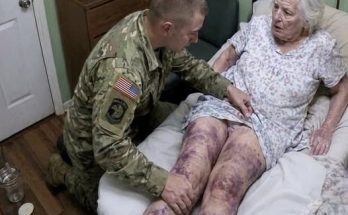
Then at her bruised wrists.
“She wants my house.”
“I think the house is part of it.”
“And the money.”
“Yes.”
Mom breathed through her nose slowly.
“What do you need from me?”
The question hurt.
Not because she sounded afraid.
Because she did not.
My mother sounded ready to fight.
“I need Abigail comfortable.”
Mom raised an eyebrow.
“I need her to believe I accept what she’s been telling me.”
“That part I understood.”
“She may say things if she thinks she has won.”
“What do I do?”
I hated the answer before I spoke it.
“Tomorrow morning, act confused.”
Mom stared at me.
The room stayed silent for several seconds.
Then she looked toward the door that had imprisoned her.
When she turned back, her expression had sharpened.
“How confused?”
Before sunrise, I passed a clean robe through Mom’s window from the porch roof and removed her dirty clothes so Abigail would not wonder how she had changed.
At seven-thirty, I opened the door.
Mom shuffled into the hallway slowly.
Abigail was downstairs making coffee.
Mom whispered, “Too much?”
“You look like you’ve forgotten what century it is.”
“Perfect.”
I nearly laughed.
Then I remembered the bruises.
At breakfast, Mom entered the kitchen holding the banister with both hands.
Abigail turned.
Her eyes went immediately to me.
I gave her a tired, helpless look.
Mom walked toward the toaster.
She studied it as though seeing machinery from another planet.
Then she asked, “Is this where the bus stops?”
Abigail’s expression transformed.
Not into concern.
Into satisfaction.
“Oh, Adela.”
Her voice became gentle and sorrowful.
She looked toward me deliberately.
“This is what I have been trying to explain.”
Mom blinked.
“Explain what?”
“Nothing. Sit down.”
“Where are we going?”
“We aren’t going anywhere yet.”
Mom stared at the kitchen window.
“My husband will be home soon.”
Dad had been dead six years.
I nearly dropped my coffee.
Abigail looked at me.
I forced a pained expression.
“Mom.”
She turned.
“Yes?”
“Dad isn’t coming home.”
“Oh.”
Mom lowered her eyes.
Abigail exhaled.
“Samuel, do you see now?”
“I see.”
Mom reached for the sugar.
She intentionally caught the bowl with her sleeve.
It hit the floor.
Sugar scattered across the tile.
Abigail’s performance vanished.
She seized Mom’s wrist.
Hard.
“You need to stop doing things like this.”
Mom flinched.
The new pressure landed directly over an old bruise.
I gripped my fork under the table.
Abigail leaned closer to Mom.
“You’re embarrassing me in front of your son.”
There it was.
Not concern.
Not fear.
Control.
“Abigail.”
She looked at me.
I made my voice mild.
“Please. She doesn’t understand.”
The grip loosened.
Abigail released Mom and stepped back.
“You’re right.”
She collected herself.
“I’m sorry. It has simply been exhausting.”
Mom wandered toward the stairs.
Once she disappeared, Abigail crouched to sweep up the sugar.
I stayed seated.
“You’ve been dealing with that every day?”
“Worse.”
“I didn’t understand.”
“No. You didn’t.”
She sounded almost pleased.
A few minutes later, she placed the legal folder beside my plate.
“The specialist is Dr. Angela Ross. Nine tomorrow morning.”
“What happens if Dr. Ross agrees with you?”
“We file the guardianship paperwork immediately.”
“And then?”
Abigail poured more coffee.
“We put your mother somewhere appropriate.”
“What about the house?”
She answered too quickly.
“We sell it.”
I looked up.
“To pay for care,” she added.
“The house is completely paid off.”
For the first time that morning, Abigail smiled without pretending sadness.
“Exactly.”
One word.
That was all.
But it told me more than the previous hour.
After breakfast, Abigail left to run what she called medical errands.
The instant her car disappeared, I went upstairs.
Mom was standing at her window.
“Well?”
I closed the door behind me.
“You deserve an acting award.”
“She hurt my wrist again.”
All humor vanished.
“Let me see.”
The skin was already reddening.
I photographed it.
“We’re done letting this continue.”
Mom nodded.
“What next?”
“Professionals.”
My first call went to the county clerk.
I did not accuse anyone.
I asked about Mom’s property records and whether any unusual instruments had been submitted.
There was no completed sale.
No recorded deed transfer.
But something had triggered a fraud alert.
A company had recently requested documentation concerning Mom’s property.
A development company.
The contact person listed on the inquiry was Raymond Clayton.
I wrote the name down.
“Do you know Raymond?”
Mom stared at it.
“No.”
My second call went to Emily Carter, a former colleague from the attorney general’s office whom I trusted enough to tell the truth.
Her response was immediate.
“Do not confront Abigail.”
“I wasn’t planning to.”
“You were absolutely planning to.”
“I’m learning restraint.”
“You’re terrible at restraint.”
She asked me to send only the documents I was legally permitted to share.
Twenty minutes later she called back.
“The receiving account on the eighty-thousand-dollar request is connected to a business entity.”
“Raymond?”
“Indirectly.”
My stomach tightened.
“Keep going.”
“Samuel, listen carefully. You are not working this case.”
“I know.”
“You are emotionally involved.”
“She locked my mother in a bedroom.”
“Which is exactly why you are emotionally involved.”
I rubbed my forehead.
“What can I do?”
“Preserve evidence. Protect Adela. Do not destroy anything. Do not threaten anybody. And get an independent medical examination of those bruises.”
That afternoon a physician affiliated with my unit documented Mom’s wrists.
He took photographs.
Measured the bruising.
Asked careful questions.
His expression became increasingly grim.
“These marks are consistent with forceful gripping,” he finally said.
“Could they be caused by falling?”
“Not in this pattern.”
Mom looked at me.
Another lie removed.
Next came the locksmith.
I told him only that we needed an expert opinion about the bedroom door.
He inspected the mechanism.
“This was deliberately reversed.”
“What does that mean?”
“The person inside can’t unlock it without the key.”
“Was that necessary for ordinary home safety?”
He gave me a strange look.
“Not unless the goal is keeping someone in.”
By late afternoon, my dining table held copies of the transfer request, access logs, photographs, and written observations.
Still, something was missing.
A link.
A reason Abigail believed she could get away with it.
Mom sat across from me drinking tea.
Suddenly she stopped.
“Your father.”
“What about him?”
“He may have recorded something.”
I stared at her.
“Dad?”
“After those burglaries years ago, he became convinced the new security cameras were unreliable.”
I remembered.
Dad trusted modern technology only when it behaved exactly like old technology.
“He bought his own camera,” Mom continued. “Tiny thing. Looked like a smoke detector.”
“Where?”
“His office.”
I stood immediately.
Dad’s old office had changed very little since his death.
Bookshelves.
A faded leather chair.
His heavy oak desk.
I checked the ceiling.
Nothing.
Then I noticed an old smoke detector above the bookcase.
I brought over a chair and removed it.
It was heavier than a smoke detector should have been.
A compartment underneath held a memory card.
Mom was standing in the doorway.
“She didn’t know about that one,” she said.
Neither did I.
I inserted the card into my laptop.
Folders appeared.
Week after week of recordings.
The timestamps covered the exact period Abigail had erased from the main security system.
I opened the first recent file.
For several seconds, nothing happened.
Then Abigail entered the frame.
She was holding my mother by both arms.
Mom struggled.
Abigail dragged her across the hallway.
Neither of us spoke.
The next recording showed Abigail taking Mom’s phone.
Another showed her turning the bedroom lock.
Another captured Abigail alone in the kitchen, practicing the story she would later tell the neighbors.
I felt something inside me grow cold.
Mom whispered, “Keep going.”
Three nights before my return, a man entered the house.
I had never seen him.
He wore an expensive gray suit.
Abigail greeted him at the door.
I checked the timestamp.
They moved into the dining room.
The camera had no perfect audio, but enough survived.
Then Abigail said his name.
Raymond.
I looked at Mom.
She looked at me.
On-screen, Raymond spread papers across our dining table.
The same table where my wife had served me dinner.
The same table where she had placed guardianship forms in front of me.
And as I increased the volume, I heard the stranger explain exactly what would happen after a doctor declared my mother mentally incompetent.
Click here to continue reading: PART 3: The Hidden Camera Captured My Wife Discussing Mom’s House With a Stranger, but the Money Trail Revealed an Even Deeper Betrayal
I Came Home Expecting My Wife’s Embrace, but the Sound Upstairs Told Me Someone Had Been Waiting Desperately for Me
Part 2 of 10