Abigail’s attorney introduced herself as Melissa Grant and immediately asked everyone to lower the temperature of the conversation.
No one had raised their voice.
That was the strange part.
The conference room remained quiet enough to hear the air-conditioning.
Abigail sat rigidly beside Melissa, both hands folded on the table.
Emily sat next to me.
A legal pad rested unopened in front of her.
“Samuel,” Melissa began, “my client understands that the situation involving your mother has become emotionally difficult.”
I looked at Abigail.
“Emotionally difficult.”
Melissa continued before I could respond.
“Abigail maintains that every decision she made was intended to protect Adela during what she reasonably believed was a period of cognitive decline.”
“Reasonably believed?”
“Yes.”
“What medical diagnosis did she have?”
Melissa paused.
“The evaluation was still pending.”
“So none.”
“Samuel,” Emily said quietly.
I stopped.
Melissa nodded.
“No completed specialist diagnosis existed at that point.”
“Thank you.”
Abigail leaned forward.
“You weren’t here.”
Her attorney touched her sleeve.
Abigail pulled away.
“You were gone for months. You don’t know what happened.”
“I know what I saw.”
“You saw a few difficult days.”
“I saw bruises.”
“She grabbed me too.”
“Did she?”
“Yes.”
“When?”
Abigail hesitated.
“She had episodes.”
“That wasn’t my question.”
Melissa intervened.
“We are not here to conduct an interrogation.”
Emily answered calmly.
“Agreed.”
I leaned back.
Old habits.
I was the son, not the investigator.
Emily asked the next question.
“Abigail, why did you redirect Adela’s bank correspondence?”
Abigail stared at her.
“I was helping.”
“Did Adela request that assistance?”
“She was forgetting passwords.”
“Did she ask you to change where her statements were delivered?”
“I don’t remember the exact conversation.”
Emily wrote something down.
“How did you obtain authority over her accounts?”
“Through paperwork she signed.”
“Did she understand what she signed?”
“Yes.”
The answer arrived quickly.
Too quickly.
I watched Abigail’s hands.
Her right thumb rubbed repeatedly against the side of her wedding ring.
Emily asked, “Then why did you believe she lacked capacity to control those same accounts?”
Silence.
Abigail blinked.
“What?”
“If she was competent enough to knowingly give you extensive financial authority, when exactly did she become too incompetent to handle her own finances?”
Abigail looked toward Melissa.
Her lawyer spoke.
“My client is not qualified to give medical opinions.”
“Neither am I,” Emily said. “That’s why an independent evaluation matters.”
I thought about Dr. Ross.
Nine o’clock the following morning.
Abigail still believed that appointment might rescue her story.
Melissa shifted the conversation toward the bedroom lock.
Abigail described Mom’s alleged wandering.
She claimed Adela once tried to leave the house after midnight.
Another time, according to her, Mom had nearly fallen down the stairs.
“Why not install a normal safety alarm?” Emily asked.
“I did what seemed necessary.”
“Why remove her phone?”
“She kept calling people at inappropriate hours.”
“Who?”
“Neighbors.”
“Which neighbors?”
“I don’t remember.”
“Did she call emergency services?”
“No.”
“Did she threaten herself?”
“No.”
“Did she threaten you?”
Abigail’s jaw tightened.
“She was aggressive.”
Emily glanced toward me, then returned to Abigail.
“Who is Raymond Clayton?”
Every trace of color left my wife’s face.
Melissa turned sharply toward her client.
Abigail recovered.
“I don’t know.”
I said nothing.
Emily did not react.
She simply waited.
Abigail looked at me.
“What are you trying to do?”
Emily repeated the question.
“Who is Raymond Clayton?”
“He’s someone I met regarding the house.”
Melissa raised one hand.
“Abigail.”
Too late.
Emily asked, “Adela’s house?”
“Yes.”
“Why were you discussing the sale of Adela’s house before she had been declared incompetent?”
“Because we needed to understand our options.”
“Who is we?”
“My family.”
Mom had not been consulted.
Neither had I.
Emily’s voice stayed neutral.
“Did Samuel participate?”
“No.”
“Did Adela?”
“She wasn’t capable of having a productive conversation.”
“So by family, you meant yourself.”
Abigail pushed her chair back slightly.
“This is ridiculous.”
Melissa requested a private break with her client.
Emily agreed.
Abigail and Melissa left the room.
The door shut.
I rubbed both hands over my face.
Emily looked at me.
“You all right?”
“No.”
“Good answer.”
“She lied immediately.”
“Yes.”
“She said she didn’t know him.”
“Yes.”
“Then admitted discussing the house with him.”
“Yes.”
I stared toward the closed door.
“Do you think Melissa knows about the payment?”
“I doubt it.”
Thirty-seven thousand five hundred dollars.
We had not mentioned it.
Not yet.
“Why hold it?”
Emily capped her pen.
“Because information has value before the other side knows you possess it.”
That was something I had taught her years earlier.
I almost laughed at the irony.
Abigail returned ten minutes later.
She looked calmer.
Melissa did not.
“We are prepared to provide a written explanation of Mr. Clayton’s involvement,” Melissa said.
Emily nodded.
“And the thirty-seven-thousand-five-hundred-dollar payment?”
Abigail froze.
Melissa turned toward her.
This time, the lawyer’s surprise was unmistakable.
“What payment?”
No one spoke for several seconds.
Abigail looked at me.
I had spent years imagining betrayal as something dramatic.
Shouting.
Thrown objects.
A confession screamed in anger.
The real thing was quieter.
It was watching your wife realize you knew about money she had never intended to mention.
Melissa slowly removed her glasses.
“Abigail?”
“It wasn’t what it looks like.”
“What was it?”
“A consulting fee.”
I heard Raymond’s voice from the old recording.
Consulting.
The same word.
Melissa asked, “Consulting for what?”
“I helped him understand the property.”
My stomach turned.
Emily remained calm.
“What expertise did you provide that justified a payment of thirty-seven thousand five hundred dollars?”
Abigail said nothing.
“You aren’t a real-estate broker,” Emily continued. “You aren’t an appraiser. You aren’t Adela’s attorney.”
“I was helping coordinate things.”
“Things that Adela had not authorized.”
“She was sick.”
“No independent evaluation had established that.”
Abigail suddenly turned toward me.
“She needed help!”
“You locked her in a bedroom.”
“She could have wandered outside!”
“You took her phone.”
“She called people constantly!”
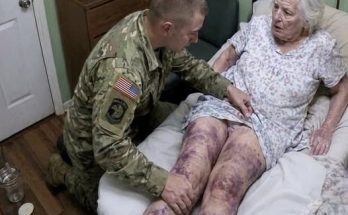
“You bruised her wrists.”
“She fought me!”
“You redirected her bank mail.”
“I was organizing it!”
“You accepted money from a man trying to buy her house.”
“That money had nothing to do with the house!”
The words struck the room and stayed there.
Emily leaned forward.
“Then what was it for?”
Abigail opened her mouth.
Nothing came out.
Melissa whispered, “Do not answer.”
The meeting ended soon afterward.
No confession.
No resolution.
But the landscape had changed.
Abigail understood we had evidence.
Her lawyer understood there were facts Abigail had not disclosed to her.
And I finally understood something else.
My marriage could not be handled as a private disagreement anymore.
Before leaving the building, Emily stopped me near the elevator.
“Tomorrow’s psychiatric evaluation goes forward.”
“With Dr. Ross?”
“Yes.”
“Abigail will come?”
“She still has every reason to.”
“Why?”
“Because people who build a story this carefully often keep believing they can repair it even after pieces start collapsing.”
The elevator doors opened.
I stepped inside.
Emily stayed outside.
“One more thing.”
I held the door.
“What?”
“Do not spend tonight trying to punish your wife.”
I stared at her.
“Spend it protecting your mother.”
The doors closed.
Mom was waiting at Rachel’s house.
She had changed into her favorite navy dress and was sitting at the kitchen table eating soup.
“How did it go?”
“She knows we found Raymond.”
Mom stopped eating.
“And the money?”
“She knows we found that too.”
“Did she explain it?”
“No.”
Mom placed her spoon down.
“She won’t.”
“You don’t know that.”
“I lived with her while you were gone.”
There was no anger in her voice now.
Only fatigue.
“She spent months explaining everything. Every locked door was safety. Every missing letter was help. Every question about my money was concern.”
Mom looked directly at me.
“People who have explanations for everything rarely have answers.”
Rachel quietly left the kitchen.
I sat opposite Mom.
“Tomorrow is the evaluation.”
“I remember.”
“We don’t need you to perform anymore.”
“Good.”
“You tell Dr. Ross exactly what happened.”
“I intended to.”
“And if you want me in the room—”
“I don’t.”
That surprised me.
Mom softened.
“Samuel, I love you. But Abigail has spent months speaking for me. I need to answer the doctor myself.”
I nodded.
“You’re right.”
“I know.”
That sounded so much like her that something in my chest loosened.
That night I prepared three complete evidence packages.
The first contained the security access records showing deleted footage.
The second included the suspicious transfer request, photographs of Mom’s injuries, and the locksmith’s findings.
The third held copies of the hidden-camera recordings.
I sent Dr. Ross only what the proper legal channel allowed her to receive before the evaluation.
Detective Cooper from the elder-abuse unit received the criminal evidence through Emily and the appropriate investigators.
I learned that law enforcement was now interested not only in Abigail, but in Raymond.
Hearthstone had appeared in other complaints involving elderly property owners.
Nothing was proven yet.
But Mom might not have been the first person Raymond had approached.
Near midnight, I reviewed the old camera one last time.
A file I had initially skipped caught my attention.
Its timestamp was nearly two months old.
Abigail and Raymond stood in the kitchen.
They were arguing.
I increased the volume.
“You said this would be finished before Samuel returned,” Raymond said.
“I thought it would.”
“What changed?”
“She refuses to cooperate.”
“Then stop asking her.”
Abigail walked away from him.
Raymond caught her arm.
“You already took the advance.”
“I know.”
“Then get the doctor.”
“I’m working on it.”
“How?”
Abigail glanced toward the hallway leading upstairs.
Then she lowered her voice.
“People already think she’s confused.”
Raymond laughed quietly.
“They think that because you keep telling them.”
“That’s the point.”
I felt my stomach twist.
The rumors had not grown accidentally.
The isolation had not been improvised after Mom resisted.
It had been preparation.
Abigail had been constructing a version of my mother for other people to believe.
Forgetful.
Unstable.
Unreliable.
By the time Mom tried to tell anyone what was happening, Abigail had already damaged her credibility.
I copied the file.
Then I heard another sentence.
Raymond said, “And if Ross doesn’t cooperate?”
Abigail’s reply came so softly I had to replay it.
“She will. I gave her everything she needs.”
I stopped the recording.
Everything she needs.
Medical records?
Fabricated reports?
Statements?
I called Emily even though it was after midnight.
She answered sleepily.
“What happened?”
“I found another recording.”
“How bad?”
“Abigail told Raymond she had already given Dr. Ross everything she needed.”
Emily was silent for a moment.
“Do not assume Ross is involved.”
“I didn’t say she was.”
“You were thinking it loudly.”
I stood from the desk.
“What if Abigail gave her false records?”
“That can be checked.”
“Tomorrow morning?”
“Yes.”
“Before Mom walks into that room?”
“Yes.”
I ended the call and went upstairs.
Mom’s former bedroom door stood open.
No outside lock.
No key.
Nothing preventing anyone inside from leaving.
I touched the empty screw holes in the wood.
The next morning Abigail arrived wearing pearls.
She looked as though she had dressed for a formal ceremony.
Mom sat in the back seat during the drive to Dr. Ross’s clinic.
Abigail insisted on riding with us.
She spent most of the journey speaking directly to Mom.
“Do not argue with the doctor.”
Mom looked through the window.
“I understand.”
“If you become confused, just say so.”
“All right.”
“And don’t become aggressive when she asks difficult questions.”
Mom finally turned.
“I’ll remember that, Abigail.”
I caught Mom’s reflection in the rearview mirror.
Her eyes were perfectly clear.
At the clinic, Abigail carried a thick folder under one arm.
She handed it to the receptionist.
“Complete medical history,” she said.
I walked toward Dr. Ross from the other side of the waiting room.
She was a serious-looking woman in her fifties with silver threaded through her dark hair.
I gave her my folder.
“What is this?” she asked.
“Information you should review before evaluating my mother.”
She opened it.
The first page showed Mom’s bruised wrists.
The second documented the reversed bedroom lock.
Then came the access records.
The transfer request.
The preliminary financial information.
Dr. Ross stopped reading.
She looked toward Mom.
Then toward Abigail.
Finally, she turned to her nurse.
“Close the office door.”
Abigail’s smile disappeared.
And for the first time since I had come home, my wife looked like someone who finally understood that the room she had carefully prepared for my mother might become a trap for her instead.
Click here to continue reading: PART 5: Dr. Ross Asked My Mother One Simple Question, and Abigail’s Carefully Built Dementia Case Began Unraveling in Front of Everyone
I Came Home Expecting My Wife’s Embrace, but the Sound Upstairs Told Me Someone Had Been Waiting Desperately for Me
Part 4 of 10