For three months, I had been asking the wrong question.
Why did Abigail want Mom’s house?
Money.
That answer was true.
But incomplete.
The better question was why the abuse escalated when it did.
Now I knew.
Mom had discovered financial accounts opened in my name.
She had confronted Abigail.
After that, the campaign portraying her as confused intensified.
The bedroom lock appeared.
Her phone vanished.
Her mail was controlled.
The more Mom tried to tell people, the less credible Abigail made her seem.
I remained standing in Melissa’s conference room.
“Where is Mom’s phone?”
Abigail looked confused by the sudden question.
“What?”
“You took it.”
“I don’t know.”
“Yes, you do.”
Melissa said, “Samuel.”
I ignored her.
“Where is the phone?”
Abigail shook her head.
“I threw it away.”
“When?”
“Months ago.”
“Why?”
“She kept recording things.”
The words escaped before Abigail seemed to realize what she had said.
Emily leaned forward.
“Recording what?”
Abigail’s face emptied.
Melissa closed her eyes.
My heartbeat accelerated.
“What did Mom record?”
“Nothing.”
“You just said—”
“She threatened to record me.”
“Where is the phone?”
“I told you. Gone.”
That was possible.
But Mom had used the same phone for years.
She backed up photographs automatically because Rachel had configured it after Dad died.
If audio files existed—
I stopped.
Cloud storage.
Emily saw the change in my face.
“What?”
“Mom’s account.”
She understood immediately.
“We leave.”
Abigail stood.
“Samuel.”
I looked back.
She appeared suddenly smaller.
“I’m cooperating.”
“No.”
My voice came out calm.
“You’re explaining only what we already found.”
That hurt her.
Perhaps because it was true.
I drove directly to Mom’s house.
She was pruning dead leaves from a plant near the kitchen window.
When I entered, she looked at me.
“Well?”
“Your phone.”
She stopped.
“What about it?”
“Did you record Abigail?”
Mom’s expression changed.
Not surprise.
Recognition.
“Yes.”
I almost laughed from sheer disbelief.
“You never told me.”
“I couldn’t find the phone.”
“Did it back up?”
“I don’t know.”
Rachel came in from the living room.
“I set up automatic backup for photos.”
“Audio?”
“Depends on the app.”
Mom wiped soil from her hands.
“I used the recorder that came with the phone.”
Rachel retrieved Mom’s laptop.
We signed into the account.
Mom remembered her password.
Another small contradiction to the dementia story.
There were photographs.
Contacts.
Notes.
No obvious audio folder.
Rachel searched settings.
“Wait.”
She opened the cloud drive.
A device backup existed from the day before the phone disappeared.
My pulse rose.
“Can we restore it?”
“Maybe.”
We did not touch the original backup further.
I called Emily.
She told us to preserve the account and let investigators handle extraction properly.
Two hours later, Cho arrived with a digital forensic specialist.
The process was maddeningly slow.
Mom made sandwiches.
Cho joked that important evidence always appeared shortly before lunch or midnight.
Eventually, the specialist found application data inside the backup.
Audio files.
Twenty-three of them.
Most were ordinary.
Mom dictating grocery lists.
A reminder to call Rachel.
A recording of a bird outside because she wanted someone to identify it.
Then came a file dated three months earlier.
The day Mom had found the credit statement.
Cho connected speakers.
“Mrs. Mercer, before we play this, do you remember recording it?”
Mom nodded.
“I put the phone in my sweater pocket.”
“Why?”
“Because Abigail had already denied the account belonged to Samuel.”
Cho started playback.
At first we heard fabric rubbing against the microphone.
Then Mom’s voice.
Clear.
“Why is there a card in Samuel’s name with twenty-eight thousand dollars on it?”
Abigail answered.
“You’re reading private mail.”
“It was delivered here.”
“You had no right.”
“He’s my son.”
“He’s my husband.”
“Does he know?”
Silence.
Then Abigail said, “I’m handling it.”
Mom’s recorded voice sharpened.
“That means no.”
“Stay out of this.”
“Did you open the account?”
“Adela.”
“Did you?”
“You don’t understand what you’re looking at.”
“I understand the name on the bill.”
In the kitchen, present-day Mom stood motionless beside me.
The recording continued.
“You’re confused,” Abigail said.
That was the first time.
Three months earlier.
The first documented use of the word that would eventually define the entire lie.
Mom replied, “I am not confused.”
“You forget things all the time.”
“I forgot where I put my gardening gloves yesterday. That doesn’t explain a credit card.”
Even Cho smiled faintly.
Then Abigail’s voice changed.
Lower.
Colder.
“You need to stop interfering in my marriage.”
“If Samuel knows, I’ll stop.”
“He doesn’t need this while deployed.”
“He needs to know someone opened debt in his name.”
“Keep your voice down.”
“Why?”
“Because I’m asking you.”
“No.”
There was movement.
Fabric scraping.
Then Mom’s voice.
“Give me back my phone.”
The file ended.
No one spoke.
Cho marked the timestamp.
The next relevant recording was two days later.
Mom had hidden the device somewhere more stable.
The audio was clearer.
Abigail was speaking to Raymond.
“You said these accounts wouldn’t matter once the sale happened.”
Raymond answered.
“They don’t.”
“Adela found one.”
“Then take the statements.”
“She already suspects me.”
“So?”
“She’ll tell Samuel.”
“He’s overseas.”
“He comes back eventually.”
Raymond laughed softly.
“By then she won’t be managing anything.”
My hands tightened.
Cho noticed.
“Samuel.”
“I’m fine.”
He paused the recording.
“You can step outside.”
“No.”
“Then remain quiet.”
I nodded.
He resumed.
Abigail asked, “What if she goes to the police?”
Raymond replied, “Who are they going to believe? The woman forgetting everything or you?”
Abigail said something too low to hear.
Raymond continued.
“Start documenting incidents.”
“What incidents?”
“Whatever she does.”
“She doesn’t do anything.”
“Everybody does something. Leaves a door open. Misplaces keys. Repeats a question.”
Then came the sentence that made Mom sit down.
“You don’t need her to be sick. You need people to think she is.”
No one in the kitchen moved.
The recording continued.
Raymond coached Abigail.
Tell neighbors Mom was wandering.
Mention memory problems to the pharmacist.
Speak to physicians before Mom did.
Create a pattern.
Mom whispered, “He taught her.”
Cho paused again.
“Mrs. Mercer—”
“I’m all right.”
Her voice shook.
“No, you’re not.”
She looked at him.
“I want to hear it.”
Cho hesitated.
Then continued.
The next files documented the progression.
Mom confronting Abigail over missing mail.
Abigail accusing Mom of paranoia.
Mom demanding her phone.
Abigail refusing.
One recording captured the installation of the bedroom lock.
A man’s voice I did not recognize asked, “Outside only?”
Abigail answered, “Yes.”
He seemed uncomfortable.
“That’s unusual for a bedroom.”
“She has dementia.”
Mom had recorded that too.
Then came the worst file.
Dated twelve days before I returned.
The audio began with shouting.
Mom.
“Open the door.”
Abigail.
“Calm down.”
“You cannot lock me in here.”
“You’re having an episode.”
“I’m having an episode because you locked me in my own bedroom!”
Something struck the door.
Then another sound.
Mom grunted.
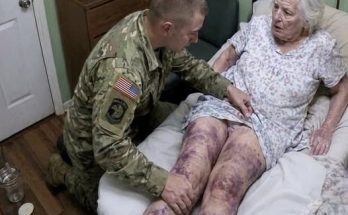
I looked at her wrists.
Even healed, I could still see faint discoloration.
On the recording, Mom said, “Let go of me.”
Abigail answered, “Then stop fighting.”
“You’re hurting me.”
“Stop.”
“You’re hurting me!”
I reached for the speaker.
Cho blocked my hand.
“Don’t.”
“I’ve heard enough.”
“This is evidence.”
“My mother is standing right here.”
Mom touched my shoulder.
“Play it.”
I turned toward her.
She was pale.
But steady.
Cho resumed.
The struggle ended.
A door slammed.
A lock clicked.
Then silence.
For almost a full minute, nothing.
Then Mom’s voice, very close to the hidden phone.
“If Samuel ever hears this, I am not crazy.”
My throat closed.
“I know what is happening.”
Present-day Mom covered her mouth.
The recording continued.
“Abigail is trying to make people believe I cannot take care of myself. She opened accounts in Samuel’s name. Raymond is helping her with the house. I don’t know how long she’ll keep me here.”
A breath.
Then quietly:
“Samuel, if you hear this, don’t blame yourself for being gone.”
I walked out.
Not because Cho told me.
Because suddenly the kitchen had no air.
I stood on the porch with both hands gripping the railing.
Mom came outside a minute later.
“You weren’t supposed to hear that while I was standing there.”
I laughed once and wiped my face.
“You recorded a message for me because you thought you might never get out.”
“I wanted someone to know.”
“You told me not to blame myself.”
“Yes.”
“I left you here.”
“You went where your country sent you.”
“I trusted her.”
“So did I.”
I looked at Mom.
“She hurt you because of me.”
“No.”
Her voice became firm.
“She hurt me because she chose to.”
I lowered my head.
Mom placed her hand on the back of my neck the way she had when I was a child.
“You do not get to steal responsibility from the person who earned it.”
That sounded like Dad.
I almost told her.
Instead I stood there until I could breathe normally again.
Inside, Cho and the forensic specialist preserved the files.
The recordings did not prove every element by themselves.
But they changed everything.
Abigail had discussed unauthorized debt.
Raymond had explicitly coached her to manufacture the appearance of cognitive decline.
The lock was not merely a safety measure after accidental wandering.
It was part of a pattern.
By evening, Cooper informed us investigators were seeking warrants related to Raymond’s records and devices.
The identity-theft aspect expanded the case.
So did the false medical documentation.
The forged property contract.
The suspicious payment.
The recorded discussions.
For the first time, Cooper used a phrase stronger than “concerns.”
“Potential coordinated fraud.”
Mom heard him.
“So there may be others.”
“We’re looking.”
“Helen Porter?”
“We’re looking.”
That was all he would say.
Three days passed.
Abigail stopped calling me.
Her attorney communicated with Emily instead.
I changed every joint financial password I was legally entitled to change, filed identity-theft reports, placed fraud alerts, and began the miserable process of discovering what had been opened in my name.
The total was worse than Abigail admitted.
One hundred and thirty-eight thousand dollars.
Cards.
A personal loan.
A line of credit.
Some accounts were already delinquent.
My credit history looked like another person’s life.
Emily kept reminding me that documentation mattered.
I kept reminding myself not to drive to Raymond’s house.
Then Cooper called at 6:40 one morning.
“I need you and Mrs. Mercer at the station.”
“Why?”
“We recovered something.”
“What?”
“I’d rather show you.”
Mom and I arrived before eight.
Cooper brought us into a conference room.
Cho was already there.
A cardboard evidence box sat on the table.
Cooper opened it.
Inside were folders.
Not Mom’s.
Different names.
Helen Porter.
Walter Jensen.
Miriam Lowe.
Carol Bennett.
Six elderly property owners in total.
Each folder contained photographs.
Property information.
Medical notes.
Family contacts.
Financial estimates.
Mom stared.
“What is this?”
Cooper answered carefully.
“Materials recovered from a storage location linked to Raymond.”
He pulled out another folder.
ADELA MERCER.
My stomach tightened.
Inside was a photograph of Mom gardening.
Another of her collecting mail.
Another taken outside her bank.
A copy of the house deed.
Tax records.
Dad’s obituary.
My deployment schedule.
Mom whispered, “He was watching me.”
Cooper nodded.
“For some time.”
“How long?”
He showed us the earliest date.
Eight years ago.
Dad had been right.
Before I married Abigail.
Before his death.
Before any debt.
Raymond had already created a file on my mother’s property.
I looked at Cooper.
“And Abigail?”
He placed one final document on the table.
An email printout recovered during the investigation.
The sender was Abigail.
The date was eight years earlier.
Months before our wedding.
The message contained only three lines.
Samuel trusts me.
His father is getting worse.
We may actually be able to do this.
Mom read it.
Then she looked at me.
I could not speak.
Because whatever uncertainty remained about why Abigail had entered my life had just become far more difficult to ignore.
Click here to continue reading: PART 9: The Eight-Year-Old Email Forced Me to Question My Entire Marriage, but Abigail’s Next Confession Revealed What Raymond Had Never Told Her
I Came Home Expecting My Wife’s Embrace, but the Sound Upstairs Told Me Someone Had Been Waiting Desperately for Me
Part 8 of 10