Dr. Ross did not look at Abigail again after ordering the office door closed.
She carried both folders into her consultation room, placed them side by side on her desk, and asked Mom to come in alone.
Abigail immediately stood.
“I should be present. I’m the one who has been caring for her.”
Dr. Ross’s expression remained neutral.
“For the initial cognitive assessment, I prefer to speak directly with the patient.”
“She becomes confused when people ask her questions without context.”
“That is one of the things I’m evaluating.”
Abigail looked toward me as though expecting support.
I stayed seated.
Mom rose from the waiting-room chair and smoothed the front of her navy dress. For months, people had watched her movements searching for evidence of decline. Now every deliberate motion seemed like a quiet act of reclamation.
Dr. Ross held the door open.
Before entering, Mom turned to Abigail.
“You told me not to argue with the doctor.”
Abigail’s mouth tightened.
Mom continued calmly.
“So I won’t.”
Then she walked inside.
The door closed.
Abigail sat beside me.
Her perfume was the same one she had worn the day I came home.
For several minutes neither of us spoke.
Finally she whispered, “You’ve poisoned her against me.”
I stared ahead.
“She was locked in a room.”
“For safety.”
“She had no phone.”
“She abused it.”
“You controlled her mail.”
“She couldn’t manage it.”
“You took money.”
“I did not take her money.”
I turned then.
“What do you call thirty-seven thousand five hundred dollars?”
Her eyes flickered toward the receptionist.
“Keep your voice down.”
“I am.”
“That was business.”
“With Raymond.”
“Yes.”
“What business?”
She crossed her arms.
“My attorney told me not to discuss it with you.”
“That may be the first piece of good advice you’ve followed.”
Her face hardened.
“You think this is simple because you were gone.”
I said nothing.
“You left,” she continued. “I stayed. I handled the appointments. The bills. Your mother’s moods. The house. Everything.”
“I was deployed.”
“I know where you were.”
“Then don’t describe it as if I disappeared voluntarily.”
“You always have a reason.”
I looked at her.
“So did you.”
She turned away.
Inside the consultation room, I could occasionally hear Dr. Ross speaking, though not the words. Mom answered in a steady voice.
Twenty minutes passed.
Then thirty.
Abigail began checking her phone.
At forty-five minutes, she stood.
“This is taking too long.”
The receptionist looked up.
“Dr. Ross will call you when she is ready.”
Abigail sat again.
At fifty-seven minutes, the door opened.
Mom came out holding a paper cup of water.
Nothing in her face revealed how the assessment had gone.
Dr. Ross remained in the doorway.
“Mr. Mercer, I’d like to speak with you briefly.”
Abigail rose too.
Dr. Ross stopped her.
“Not yet.”
I followed the doctor inside.
Mom sat in a chair beside the desk.
Dr. Ross closed the door.
Then she looked at me.
“I have several serious concerns.”
My stomach tightened.
“About Mom?”
“About the information that was provided to me before today.”
She opened the thick folder Abigail had brought.
Inside were typed incident reports.
Medication lists.
Printed emails.
Notes allegedly documenting disorientation, paranoia, wandering, aggression, and memory failure.
Dr. Ross lifted several pages.
“Your wife sent these records to my office over the past three weeks.”
Mom’s jaw tightened.
“Without my permission?”
“She represented herself as your caregiver with authority to coordinate treatment.”
“What do the records say?”
Dr. Ross hesitated.
“They portray substantial cognitive deterioration.”
“That isn’t an answer.”
Mom’s voice remained calm.
Dr. Ross nodded.
“You’re right.”
She turned the first page.
“According to this report, you became lost while walking two blocks from home and were returned by police.”
Mom stared at her.
“That never happened.”
“I suspected as much.”
Another page.
“This says you left a stove burner running and caused a kitchen fire.”
“No.”
“Here, you allegedly accused a mail carrier of stealing from you.”
“No.”
“And this note states you attempted to strike Abigail with a lamp.”
Mom leaned back.
“I’ve owned that lamp longer than she’s been married to my son. I would never risk it.”
For one second, even Dr. Ross smiled.
Then her seriousness returned.
“I also received what appears to be a summary from a prior medical provider.”
She pushed it across the desk.
I recognized the clinic’s letterhead.
Mom read it.
Her expression changed.
“What?”
I leaned closer.
The document described “progressive memory impairment over approximately eighteen months.”
Mom had never been treated for progressive memory impairment.
Dr. Ross tapped the bottom.
“The physician named here retired four years ago.”
I felt something cold move through me.
“Was this sent from the clinic?”
“No.”
“Then where?”
“An email address using the clinic’s name.”
Mom whispered, “She made it.”
“We cannot say that yet,” Dr. Ross replied. “But I can say I contacted the clinic yesterday because something about the formatting seemed unusual.”
“Yesterday?”
“Yes. Before your son arrived with his materials.”
Dr. Ross looked at me.
“The clinic has no record matching this document.”
Mom sat very still.
I understood now what Abigail had meant on the hidden recording.
I gave her everything she needs.
Not evidence.
A script.
Dr. Ross folded her hands.
“Your mother completed a standardized cognitive screening today.”
I held my breath.
“She performed within the expected range for her age.”
Mom looked at me.
Dr. Ross continued.
“One screening does not establish everything. Stress, medication, depression, sleep deprivation, and other factors can influence cognition. I would normally consider additional assessment.”
“But?” I asked.
“But I found no clinical basis today for describing Mrs. Mercer as globally incompetent.”
The words settled over the room.
Mom’s eyes filled.
She did not cry.
She simply lowered her head and pressed two fingers beneath one eye.
Dr. Ross gave her time.
Then she said, “I also asked Mrs. Mercer about recent events, finances, medications, family history, current public events, and practical decision-making.”
Mom looked up.
“Apparently I still know what year it is.”
“You also corrected me on the county tax deadline.”
“You were wrong.”
Dr. Ross smiled faintly.
“I was.”
I swallowed.
Months of Abigail telling neighbors Mom could not remember where she was.
Weeks of locked doors.
Documents designed to turn ordinary disagreements into symptoms.
And one independent examination had exposed the central lie.
Dr. Ross’s expression changed.
“There is another issue.”
She opened Abigail’s folder again.
“I need to preserve these materials.”
“For the investigation?”
“Yes.”
Mom nodded.
“Do whatever you need.”
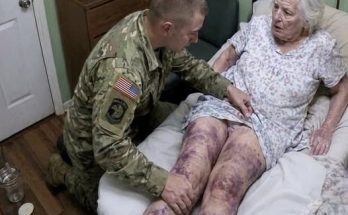
Dr. Ross then asked permission to photograph the bruising on Mom’s wrists for her own medical documentation.
Mom agreed.
Afterward, Dr. Ross called Abigail inside.
I remained because Mom specifically asked me to.
Abigail entered with visible impatience.
“Well?”
Dr. Ross gestured toward the chair.
“Please sit.”
Abigail did.
Dr. Ross spoke carefully.
“I completed an initial assessment of Mrs. Mercer.”
“And?”
“I do not find evidence today supporting the degree of impairment described in the materials you provided.”
Abigail blinked.
“That’s impossible.”
Mom’s hand tightened around mine.
Dr. Ross continued.
“Cognitive symptoms can vary, but several of your reports contain factual claims Mrs. Mercer disputes.”
“She lies.”
“Abigail,” I said.
Dr. Ross lifted one hand.
“I also verified one purported medical document with the provider named on it.”
Abigail’s face changed.
Only slightly.
But enough.
Dr. Ross saw it.
So did I.
“The provider has no corresponding record,” she continued.
Abigail looked toward me.
“You did this.”
“I didn’t create your folder.”
“You called her before the appointment.”
“No.”
Dr. Ross answered instead.
“I contacted the clinic independently.”
Abigail looked cornered.
She reached for her purse.
“I want my documents back.”
Dr. Ross closed the folder.
“These were submitted to my office as medical materials. They are now part of the record.”
“I gave them to you.”
“Yes.”
“So return them.”
“I will retain them in accordance with my professional and legal obligations.”
Abigail stood.
“Samuel, we’re leaving.”
I almost laughed.
“We?”
Her face flushed.
“You are my husband.”
“And she is my mother.”
“That doesn’t answer me.”
“No. We are not leaving together.”
Mom inhaled quietly beside me.
Abigail stared at me.
Something cracked in her composure.
“You think she won.”
“This isn’t a contest.”
“It has always been a contest with her.”
Mom finally spoke.
“I never wanted your husband, Abigail.”
The room went silent.
“I wanted my son to have a wife who loved him.”
Abigail’s eyes filled with fury.
“You never thought I was good enough.”
“I thought you were impatient.”
“You judged everything I did.”
“I asked why you needed access to accounts that were not yours.”
“You interfered.”
“I asked questions.”
“You humiliated me.”
“When?”
“At Christmas. At Rachel’s birthday. At that dinner when Raymond—”
She stopped.
Everyone heard it.
Raymond.
Mom’s face sharpened.
“What dinner?”
Abigail grabbed her purse.
Melissa had not come to the appointment, and for the first time I saw what Abigail looked like without anyone nearby to pull her back from the edge.
“I’m done.”
Dr. Ross stood.
“Mrs. Mercer, do you feel safe leaving this building?”
Abigail turned toward her.
“What is that supposed to mean?”
“I asked my patient a question.”
Mom looked at Abigail.
Then at me.
“Yes,” she said. “As long as I don’t leave with her.”
Abigail walked out.
The outer door slammed hard enough to rattle the glass.
I started after her.
Mom caught my wrist.
“Don’t.”
“She mentioned Raymond before she claimed to know him only through the house.”
“I heard.”
“What dinner?”
Mom’s eyes narrowed.
“That’s what we need to find out.”
By noon, Detective Cooper had copies of the questionable medical documents.
By two, the former physician’s clinic confirmed in writing that it had not generated the dementia summary.
By four, Emily informed me that investigators had obtained enough information to begin formal inquiries into the financial records surrounding Hearthstone and Raymond.
None of that meant Abigail would be arrested.
None of it meant charges were guaranteed.
But the wall she had built around Mom was collapsing.
That evening, I returned to the house alone to collect more of my clothes.
Abigail’s car was gone.
So were several suitcases.
Her closet was half empty.
On the kitchen counter sat her wedding ring.
No note.
No explanation.
Just the ring.
I stood looking at it longer than I expected.
Then my phone rang.
It was Mom.
“Samuel?”
“I’m here.”
“Rachel found something.”
Her voice had changed.
“What?”
“A photograph.”
“Of what?”
“A dinner.”
I stopped breathing for a second.
“Raymond?”
“Yes.”
“Where?”
“Your father’s old photo albums.”
I drove to Rachel’s house.
Mom had the photograph waiting on the kitchen table.
It was dated almost eight years earlier.
Before Abigail married me.
Before Dad died.
Before Raymond supposedly entered our lives through Mom’s house.
In the photograph, a much younger Abigail stood beside Raymond at a crowded restaurant.
His arm was around her waist.
They were both smiling directly at the camera.
On the back, written in Dad’s handwriting, were four words.
Abigail and Raymond again.
Again.
Not recently.
Not accidentally.
And certainly not for the first time.
Click here to continue reading: PART 6: My Father’s Old Photograph Proved Abigail Had Lied About Raymond for Years, Then Mom Remembered Why Dad Had Distrusted Him
I Came Home Expecting My Wife’s Embrace, but the Sound Upstairs Told Me Someone Had Been Waiting Desperately for Me
Part 5 of 10